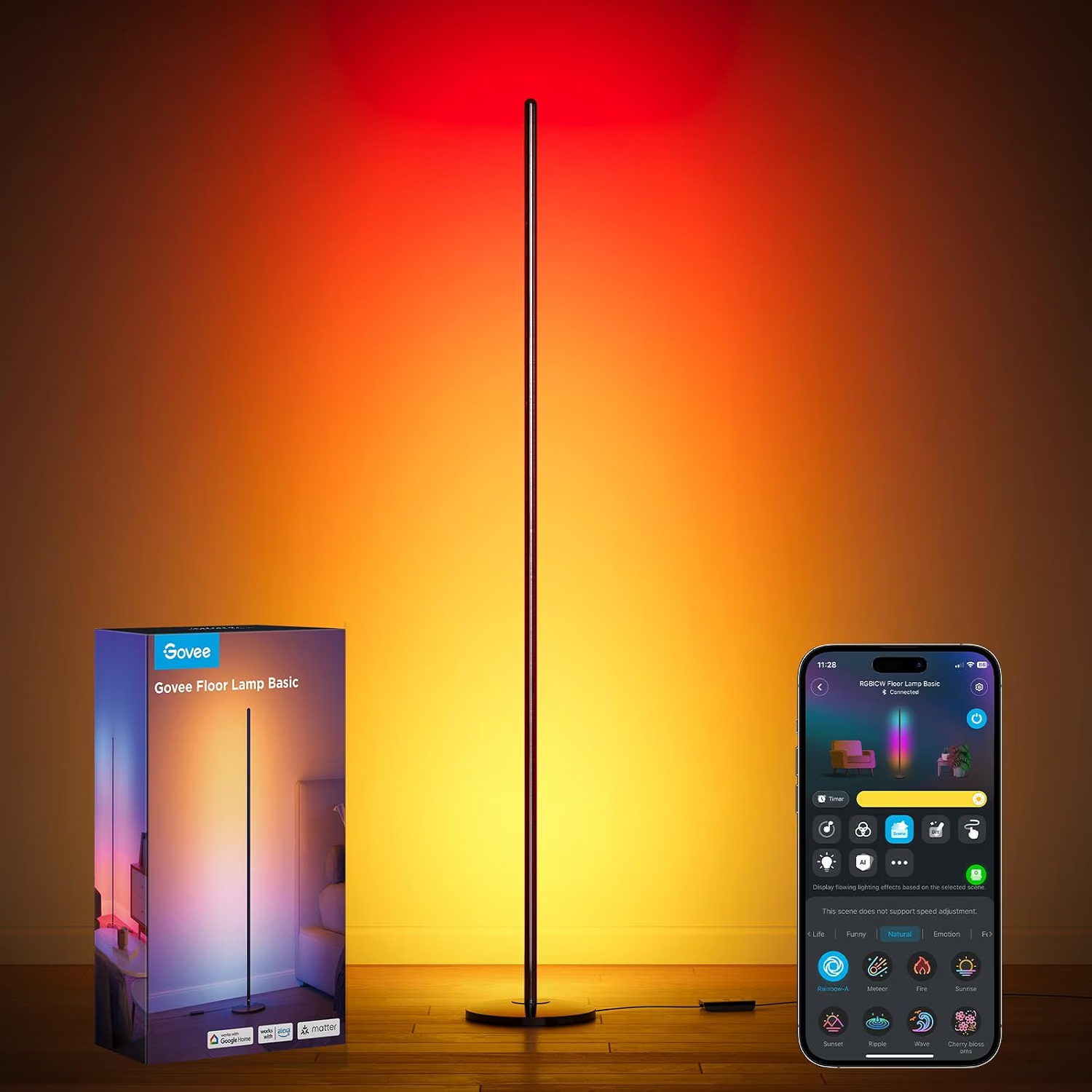
Floor lamps have long been a practical way to add illumination without occupying valuable desk or table space. A corner lamp takes that idea a step further by using vertical space, making it possible to add a dedicated light source to an otherwise unused part of a room.
The Govee RGBIC Floor Lamp Basic is a black LED corner floor lamp designed to provide adjustable ambient lighting in spaces such as bedrooms, living rooms, gaming areas, offices, and entertainment spaces. With a stated brightness of up to 1000 lumens and RGBIC lighting technology, it combines functional illumination with customizable color effects.
Unlike a conventional floor lamp that may rely on a replaceable bulb and a physical switch, a smart RGBIC floor lamp is designed around digital control and lighting customization. Users can select different colors, brightness levels, and lighting effects according to the activity or atmosphere they want to create.
This can make one floor lamp useful in several different situations. A brighter setting may contribute additional illumination to a living room or workspace, while a lower, more colorful setting can function as accent lighting during a movie, game, or evening gathering.
At the same time, RGBIC lighting should be understood primarily as a flexible form of ambient and accent lighting. It does not necessarily replace every other source of illumination in a room. Task lighting, general ceiling lights, reading lamps, and other fixtures each serve different purposes.
The Govee RGBIC Floor Lamp Basic is therefore best considered as part of a broader lighting arrangement. Its vertical design can help fill an empty corner, while its color and brightness controls provide opportunities to adapt the room’s appearance throughout the day.
This guide explains the main characteristics of the lamp, how RGBIC technology works in practical terms, possible applications, setup considerations, and how a smart corner floor lamp compares with other common lighting categories.
What Is the Govee RGBIC Floor Lamp Basic?
The Govee RGBIC Floor Lamp Basic is a vertical LED floor lamp designed to stand independently on the floor, typically near a wall or in a room corner.
The term “corner lamp” describes its intended placement and lighting approach. Rather than illuminating a surface from a table or hanging from the ceiling, the lamp occupies vertical space and can direct or diffuse light into the surrounding room.
Its black finish gives it a relatively neutral appearance that can work with many interior styles.
The lamp’s RGBIC technology adds color customization beyond conventional white LED illumination.
RGBIC is related to RGB lighting, but the “IC” component refers to integrated control circuitry that can allow different sections of an LED light source to display different colors as part of an effect.
This makes it possible to create more dynamic lighting scenes rather than limiting the entire lamp to one color at a time.
The stated 1000-lumen brightness is another important characteristic.
Lumens describe the amount of visible light produced by a source. A higher lumen figure generally indicates more total light output, although perceived brightness also depends on how the light is distributed, the room’s size, wall colors, placement, and the user’s viewing position.
Key Features
Up to 1000 Lumens of LED Illumination
The Govee RGBIC Floor Lamp Basic is specified with brightness of up to 1000 lumens.
This provides enough output for the lamp to contribute meaningful illumination to a room rather than functioning exclusively as a tiny decorative accent.
However, the usefulness of a particular brightness level depends on the environment.
A 1000-lumen lamp positioned in a small room may contribute significantly to the overall lighting, while the same lamp used in a large living room may function primarily as supplemental illumination.
The way a floor lamp is positioned also matters. Light directed toward a nearby wall can create a different visual effect from light distributed more directly into the room.
RGBIC Lighting
RGBIC is one of the defining features of the lamp.
Traditional white LED lighting focuses on illumination, while RGB lighting introduces color selection.
RGBIC can provide more complex multi-color effects because different sections of the lighting system can be controlled as part of a scene.
This can be useful for decorative applications.
A user might select a single warm color for a subtle evening atmosphere or use a multi-color effect when creating a more energetic environment for entertainment.
The exact effects and available controls depend on the supported Govee software and current functionality.
Corner-Friendly Vertical Design
The vertical design makes use of floor-to-ceiling space that might otherwise remain unused.
A corner can sometimes feel visually empty, particularly in minimalist rooms or spaces with limited furniture.
Adding a floor lamp can fill that area while providing a practical lighting function.
The vertical orientation can also help distribute light higher in the room than a small table lamp.
This can create indirect illumination when the lamp is positioned close to a wall.
Black Finish
The black finish provides a simple visual appearance that can blend into many modern interiors.
Because the lamp is tall, its appearance can be noticeable even when the light is switched off.
For this reason, placement and design can matter almost as much as the lighting effect itself.
A neutral finish can make it easier to incorporate the lamp into a bedroom, living room, office, or gaming space without requiring the rest of the décor to match a particular color.
LED Lighting
LED technology provides the underlying light source.
LED lamps are commonly used in modern lighting because they can provide substantial illumination in relatively compact fixtures.
They also support rapid changes in brightness and color when paired with suitable control electronics.
For a smart floor lamp, LED technology is particularly useful because the same light source can be controlled digitally.
Smart Lighting Control
The Govee RGBIC Floor Lamp Basic is designed to provide more than simple on/off functionality.
Smart lighting controls can allow users to adjust brightness, colors, and effects according to their preferences.
Depending on the current software and supported ecosystem, controls may include app-based adjustments, scenes, and other smart-lighting features.
Because connected products can receive software updates, available functions may change over time. Users should consult the manufacturer’s current documentation for the latest capabilities.
How the Govee RGBIC Floor Lamp Basic Can Be Used
Living Room Accent Lighting
A floor lamp can be placed beside a sofa, entertainment center, bookshelf, or room corner to add a secondary light source.
Rather than relying entirely on an overhead fixture, users can create multiple layers of illumination.
For example, a ceiling light can provide general lighting while the corner lamp contributes softer or colored light.
This layered approach can change the atmosphere of a room without requiring major changes to the furniture or electrical installation.
Bedroom Lighting
The bedroom is another natural application.
A tall corner lamp can provide ambient lighting without occupying a bedside table.
Users can select a lower brightness in the evening and choose colors that complement the room’s décor.
Because RGB lighting can be visually stimulating, people who prefer a calmer bedroom environment may choose more subdued settings.
The lamp’s role can also change throughout the day. It may provide brighter supplemental illumination during daytime activities and lower ambient lighting later.
Gaming Room Lighting
RGBIC floor lamps are often used as part of gaming-room setups.
The vertical placement allows the lamp to add a large area of colored illumination without occupying the main desk surface.
This can complement monitors, keyboards, desktop lighting, or other RGB accessories.
Multi-color scenes can also contribute to the visual environment around a gaming station.
The lamp does not have to match every other RGB device to be useful. A coordinated color palette can be enough to create a consistent appearance.
Home Theater and Movie Nights
A floor lamp can also function as ambient lighting during entertainment.
Some people prefer not to watch a screen in complete darkness, while bright overhead lighting can create distracting reflections.
A low-intensity corner lamp can provide background illumination without becoming the main visual focus.
The ideal setting depends on the room, screen placement, and personal preference.
Users should experiment with positioning to minimize reflections on televisions or monitors.
Home Office
A floor lamp can provide supplemental illumination in a home office.
It may help brighten a darker corner of the room and reduce the contrast between a bright monitor and a dim surrounding environment.
However, a corner floor lamp is not always a substitute for dedicated desk lighting.
People working with printed documents or detailed materials may still benefit from a task lamp positioned closer to the work surface.
The floor lamp can instead contribute to the overall room lighting.
Reading Areas
A floor lamp can be useful near a chair or reading area.
If positioned appropriately, it can provide additional illumination around the seating area.
The lighting requirements for reading are more specific than those for decorative illumination, so users should consider the lamp’s brightness, position, and potential shadows.
A dedicated reading lamp may offer more directional control when detailed task lighting is the priority.
Apartment and Small-Space Lighting
Vertical lighting can be particularly useful in apartments or rooms where table surfaces are limited.
Instead of placing another lamp on a desk or side table, a floor lamp uses the floor area and vertical space.
This can leave other surfaces available for books, electronics, decorations, or everyday items.
Decorative Lighting
RGBIC technology gives the lamp a strong decorative role.
Users can choose colors that complement furniture, wall décor, or other lighting.
For events, a colorful scene can change the atmosphere of the room without requiring permanent decorative installations.
The lamp can therefore serve as both a functional light and an interior-design element.
Understanding Lumens and Brightness
The 1000-lumen specification provides a useful reference point, but it should not be interpreted as a guarantee that every room will appear equally bright.
Lumens measure light output, while perceived brightness depends on several factors.
Room size is one.
Wall color is another.
Light-colored walls can reflect more light around a room, while darker surfaces absorb more.
The lamp’s position also matters.
A lamp directed toward a wall can create broad indirect illumination, while positioning it in an open area may distribute light differently.
Brightness settings matter as well.
If the lamp is capable of adjustable brightness, users can select an appropriate level rather than operating it at maximum output at all times.
Understanding these factors helps explain why a lumen figure alone cannot determine how a lamp will look in a particular room.
Understanding RGBIC Lighting
RGBIC lighting is different from ordinary single-color lighting because it can create more complex visual effects.
Imagine a vertical strip of LEDs.
With basic single-color control, the entire strip might display one color.
With more advanced RGBIC control, different sections can participate in a scene with multiple colors.
This creates effects such as gradients, transitions, and other dynamic patterns.
The result can be especially noticeable on a tall floor lamp because the vertical form gives multi-color scenes a larger visual presence.
RGBIC lighting is therefore particularly relevant for ambient environments, gaming rooms, entertainment spaces, and decorative setups.
For practical illumination, users may still prefer a simpler white or neutral setting.
Creating Layers of Light
Good room lighting often involves several layers.
Ambient lighting provides general illumination.
Task lighting supports specific activities such as reading or working.
Accent lighting highlights architectural features, artwork, furniture, or decorative elements.
A floor lamp can contribute to more than one of these categories depending on its brightness and placement.
For example, it can provide ambient illumination when set to a bright neutral tone and act as accent lighting when switched to a lower colored setting.
Using it alongside existing ceiling and task lights can create more flexibility than relying on one fixture for every purpose.
Who May Find This Type of Floor Lamp Useful?
People Updating a Room Without Major Renovation
A floor lamp can change the appearance of a room without requiring new wiring or permanent installation.
It can be moved when furniture arrangements change.
This makes floor lighting a relatively flexible way to experiment with room illumination.
RGB Lighting Enthusiasts
People who enjoy customizable lighting can use RGBIC effects as part of a larger setup.
The vertical format can add another dimension to an RGB environment that already includes desktop or wall lighting.
Gamers
A corner lamp can complement gaming equipment while leaving the desk itself relatively uncluttered.
The vertical light source can also create a more immersive background environment.
Remote Workers
A home office may benefit from supplemental ambient illumination.
A floor lamp can brighten a darker part of the room while keeping desk space available for work equipment.
Interior-Design Enthusiasts
People who use lighting as part of their décor may appreciate the ability to change colors and scenes according to the season, occasion, or room design.
Small-Space Households
People with limited table and desk space can use vertical lighting to reduce competition for horizontal surfaces.
Important Things to Consider
Floor Stability
A tall floor lamp should be placed on a stable, level surface.
Because the lamp has a vertical profile, its stability matters.
Avoid placing it where people frequently walk, where pets may knock it over, or where furniture could accidentally contact it.
Cable Placement
The lamp is powered by an electrical cable, so cable management should be considered during installation.
The cord should not cross a walking path where someone could trip over it.
It should also not be pinched beneath heavy furniture or placed in a position where it can be pulled accidentally.
Room Size
The lamp’s 1000-lumen output can contribute significant illumination, but larger rooms may require additional lighting.
A single floor lamp should not necessarily be expected to illuminate every area evenly.
Think of it as one component of the room’s lighting system.
Color vs. Function
RGB colors are useful for atmosphere, but they may not always be appropriate for detailed tasks.
If the goal is reading, writing, crafting, or working with small objects, users may prefer a suitable white-light setting or an additional task lamp.
Screen Reflections
When used near a television or computer monitor, lamp placement deserves attention.
Bright light directed toward a screen can produce unwanted reflections.
Placing the lamp behind or beside the viewing area may create a more comfortable result.
App and Software Requirements
Smart lighting often depends on companion software.
Users should verify smartphone compatibility and the requirements of the current Govee application.
Connected features can also depend on account configuration and network connectivity.
Voice Assistant Compatibility
If voice control is important, users should verify which voice assistants and specific functions are currently supported by the particular model.
Compatibility can change as software platforms evolve.
Privacy and Account Security
Connected lighting is less privacy-sensitive than a camera-equipped device, but it is still part of a digital ecosystem.
Users should protect associated accounts and use strong credentials.
Keeping companion applications and supported firmware updated can also be part of normal device maintenance.
Smart Floor Lamp vs. Traditional Floor Lamp
A traditional floor lamp usually offers straightforward lighting through a switch, dimmer, or compatible bulb.
Its main advantage is simplicity.
A smart RGBIC floor lamp adds digital control, color customization, and potentially programmable lighting scenes.
The additional functionality can be useful for people who want their lighting to change throughout the day.
However, smart features also introduce additional setup and software dependencies.
Someone who only needs a reliable light source may prefer a simpler fixture.
Someone interested in customizable ambient lighting may appreciate the additional capabilities of a smart model.
Smart Floor Lamp vs. Smart Bulb Floor Lamp
Another approach to smart lighting is using a traditional floor lamp with a smart bulb.
This allows the user to keep a conventional fixture while adding smart control through the bulb.
A dedicated RGBIC floor lamp integrates the lighting system and fixture into one product.
A smart-bulb setup may offer greater flexibility in choosing the physical lamp style, while an integrated floor lamp provides a purpose-built design.
The better fit depends on whether the user prioritizes furniture aesthetics, bulb interchangeability, lighting effects, or simplicity.
Floor Lamp vs. Table Lamp
Table lamps occupy horizontal surfaces.
Floor lamps use floor space and vertical height.
This difference can be significant in small rooms.
A desk or nightstand may already contain chargers, books, electronics, and other objects.
Moving the light source to the floor can free that surface.
Floor lamps can also provide a different distribution of light because their source is positioned higher.
Table lamps remain useful when localized lighting is needed close to a particular surface.
RGBIC Floor Lamp vs. Ambient LED Strip
LED strips can be placed behind desks, televisions, shelves, beds, and other surfaces.
They are often excellent for indirect accent lighting.
A floor lamp offers a different form factor.
It can stand independently and be repositioned without permanently attaching lighting to furniture or walls.
An LED strip may therefore be better suited to concealed accent lighting, while a floor lamp can provide a more visible and movable lighting element.
Setting Up the Govee RGBIC Floor Lamp Basic
The exact assembly and setup procedure should follow the manufacturer’s current instructions.
Generally, the process begins by assembling the floor lamp components and ensuring the base is securely connected.
Position the lamp on a stable surface near an appropriate power outlet.
After connecting the power supply, users can configure available controls according to the product documentation.
If smart functionality is supported through a companion application, install the appropriate software on a compatible smartphone and follow the current pairing process.
Once the lamp is connected, test basic controls before creating customized scenes.
Starting with simple brightness and color adjustments makes it easier to understand how the lamp responds.
After that, users can experiment with different scenes and schedules where supported.
Choosing the Right Location
Placement has a major impact on the lamp’s visual effect.
A corner near a wall can allow light to reflect across a larger surface.
Placing the lamp behind a sofa can create background illumination while keeping the fixture relatively unobtrusive.
Near a television, the lamp can contribute ambient light, but it should be positioned carefully to avoid screen reflections.
In a gaming room, placing the lamp behind or beside the desk can create a colorful background without competing directly with the monitor.
In a bedroom, a corner position can keep the lamp away from the bedside area while still providing ambient illumination.
There is no single ideal position for every room.
The best placement depends on the room layout, furniture, wall surfaces, and desired lighting effect.
Building Useful Lighting Scenes
A smart RGBIC lamp can be used more effectively when scenes are tied to actual activities.
A daytime scene might use brighter neutral illumination.
An evening scene could reduce brightness and introduce a warmer color.
A movie scene might use a low-intensity ambient color.
A gaming scene could use a more dynamic RGBIC effect.
A party or social scene might use brighter, more colorful transitions.
The objective is not to create dozens of scenes simply because the software allows it.
A few useful presets can be easier to manage and more likely to become part of everyday routines.
Frequently Asked Questions
What is the Govee RGBIC Floor Lamp Basic?
It is a vertical LED floor lamp designed for ambient and decorative lighting, with RGBIC color capabilities and a stated maximum brightness of 1000 lumens.
What does RGBIC mean?
RGBIC refers to RGB lighting with integrated control circuitry that can independently control sections of the light source as part of certain multi-color effects.
How bright is the lamp?
The product is specified at up to 1000 lumens.
Actual perceived brightness depends on the selected setting, room size, placement, wall surfaces, and other environmental factors.
Can the lamp display multiple colors?
RGBIC lighting is designed to support multi-color effects, allowing different sections of the light source to participate in certain scenes.
Can it be used as a bedroom lamp?
Yes. A floor lamp can provide ambient lighting in a bedroom, particularly when placed in a corner or beside furniture.
Users can select brightness and colors according to their preferences.
Can it be used in a gaming room?
The RGBIC lighting design can be incorporated into gaming setups as ambient or decorative lighting.
Its vertical form can also help illuminate a larger background area than a small desk light.
Can it replace a ceiling light?
Not necessarily.
A floor lamp can provide supplemental or localized illumination, but room lighting requirements vary.
Larger spaces may need multiple light sources for even illumination.
Is 1000 lumens enough for a room?
It depends on the room.
Room size, ceiling height, wall color, lamp placement, and other lighting sources all affect how bright 1000 lumens will appear.
Does a floor lamp need to be placed in a corner?
It does not necessarily have to be in a corner.
The product’s vertical design makes corner placement practical, but it can also be positioned beside furniture or in another suitable location where stability and cable access are maintained.
Can it be used for reading?
It can contribute illumination to a reading area, but the exact suitability depends on positioning and brightness.
For detailed reading, users may still prefer dedicated task lighting positioned closer to the reading material.
Can RGBIC lighting be used for normal illumination?
Yes, depending on the selected lighting mode.
However, neutral or white illumination may be more appropriate for tasks requiring clear visibility than saturated colors.
Does the lamp use LED technology?
Yes. The lamp is designed around an LED lighting system.
Does it require a power outlet?
The product is a corded floor lamp, so it requires access to a suitable electrical power source.
Can I move the lamp to another room?
A floor lamp can generally be repositioned when needed, provided it is safely assembled and placed near a suitable outlet.
Users should disconnect power before moving electrical equipment when appropriate.
Can it be used near a TV?
It can be used near a television, but placement matters.
The lamp should be positioned to reduce reflections and avoid creating distracting bright spots on the screen.
Can I use it in a home office?
Yes. It can provide supplemental ambient lighting and help brighten darker areas around a workspace.
A dedicated desk lamp may still be useful for close-up work.
Does smart lighting require a smartphone?
Connected features commonly use companion applications, although the exact requirements depend on the product’s supported control methods.
Users should check the current manufacturer’s instructions.
Can smart lighting work without an internet connection?
Some functions may work through local controls or direct connections, while certain connected features can depend on internet or cloud services.
The exact behavior should be verified in the current product documentation.
Does RGBIC lighting consume more power than ordinary lighting?
Power consumption depends on brightness, color mode, lighting effects, and other operating conditions.
Using the lamp at lower brightness generally changes its energy use compared with operating it continuously at maximum output.
How should I position the lamp?
A stable location near a wall or corner can help create indirect illumination.
However, the ideal position depends on the room layout and intended use.
Practical Tips for Everyday Use
A smart floor lamp can be more useful when it is treated as part of the room’s overall lighting strategy.
Start by identifying what the room needs.
If the space feels dark in one corner, use the lamp to fill that area.
If the goal is entertainment lighting, experiment with lower brightness and color effects.
If the lamp is being used around a television or monitor, position it to minimize reflections.
For a home office, use it as supplemental room illumination rather than assuming that colored light alone is sufficient for detailed work.
For a bedroom, consider lower-intensity settings during the evening.
It is also worth experimenting with indirect lighting.
Positioning the lamp near a wall can allow light to reflect and spread across a larger surface, potentially creating a softer visual effect than placing it in the middle of an open area.
Keeping Smart Lighting Simple
The number of possible lighting colors and effects can make experimentation enjoyable, but too many settings can make a smart lighting system unnecessarily complicated.
A small selection of useful scenes is often enough.
For example:
- Daytime lighting for general activity
- Work lighting for a home office
- Evening lighting for relaxation
- Movie lighting for entertainment
- Colorful lighting for gaming or social occasions
These settings can cover many everyday situations without requiring constant manual adjustment.
The lamp can then remain a practical fixture even when its smart features are not being actively used.
Final Thoughts
The Govee RGBIC Floor Lamp Basic combines the familiar functionality of a vertical floor lamp with customizable LED lighting and RGBIC effects.
Its stated 1000-lumen output allows it to contribute meaningful illumination, while the RGBIC system provides a broader range of decorative possibilities than a conventional single-color lamp.
The vertical form can be especially useful in corners, beside furniture, or in spaces where desk and table surfaces are already occupied.
It can serve different purposes depending on the setting. In a living room, it can contribute ambient lighting. In a bedroom, it can provide a softer secondary light source. In a gaming space, RGBIC effects can become part of the visual environment. In a home office, it can help illuminate the surrounding room while leaving the desk available for work equipment.
The lamp should still be considered one component of a complete lighting arrangement. A floor lamp may not replace dedicated task lighting or a room’s primary light source, particularly when detailed work or broad illumination is required.
Users should also consider floor stability, cable placement, room size, screen reflections, smartphone and software requirements, and the differences between ambient color lighting and functional task illumination.
RGBIC technology is particularly valuable for people who want their lighting to change with the activity. The same fixture can move from practical illumination to decorative color effects without requiring a different lamp.
When used thoughtfully, a smart corner floor lamp can provide both functional and visual flexibility while making use of floor and vertical space that might otherwise remain unused.
Leave a Reply