Author: hocineghazouan@gmail.com

  • Echo Dot: A Practical Guide to a Compact Alexa Smart Speaker

    Echo Dot: A Practical Guide to a Compact Alexa Smart Speaker

    Smart speakers have become a common part of connected homes, combining audio playback with voice-controlled access to information, entertainment, reminders, and compatible smart-home devices. Instead of opening an application or reaching for a phone, users can speak naturally to a voice assistant and ask it to perform supported tasks.

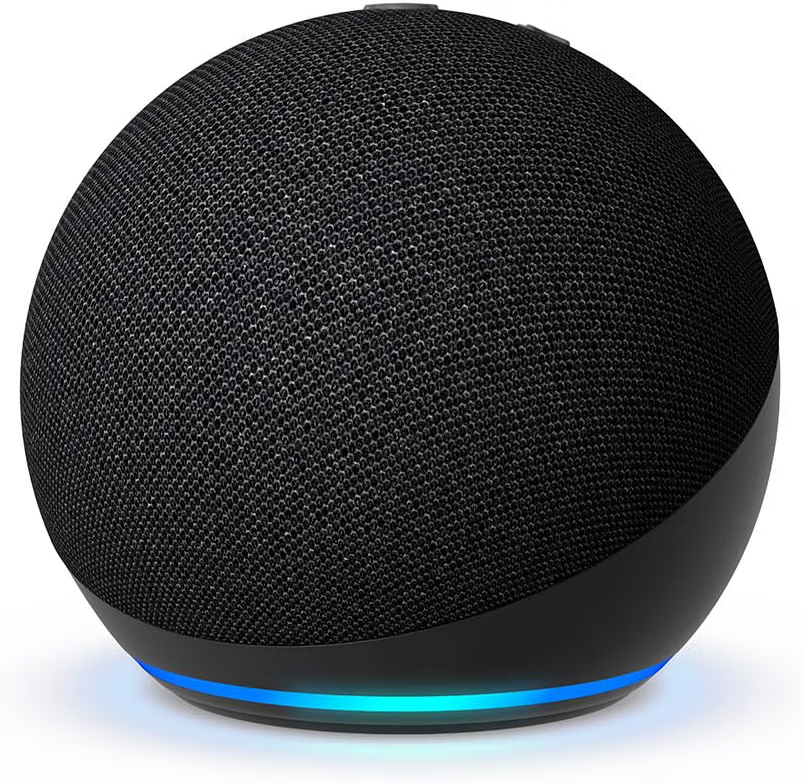
    The Amazon Echo Dot in Charcoal is a compact smart speaker designed for everyday spaces such as bedrooms, dining rooms, offices, kitchens, and other areas where a small voice-controlled device can be useful. The product is presented as a vibrant-sounding speaker designed for Alexa+, bringing together audio playback and Alexa-based functionality in a relatively small form factor.

    The appeal of a device in this category is not limited to playing music. A smart speaker can become a convenient interface for timers, alarms, reminders, weather information, compatible smart-home controls, and hands-free interactions. It can also serve as a central point for routines that connect several devices or actions.

    At the same time, a smart speaker is not simply an ordinary speaker with a microphone. It depends on software, an internet connection for many cloud-based functions, an Amazon account, and compatibility with supported services and devices. Features can also change as Amazon updates Alexa and related services.

    Understanding those differences is useful when deciding how a compact Echo Dot can fit into a home or workspace.

    This guide explores the Echo Dot’s role as a smart speaker, its key characteristics, practical applications, smart-home possibilities, privacy considerations, and the differences between a voice assistant speaker and other types of connected devices.

    What Is the Amazon Echo Dot?

    The Amazon Echo Dot is a compact smart speaker built around Alexa.

    Its primary interaction method is voice.

    Instead of requiring a touchscreen or keyboard for many everyday requests, the user can speak to the device after activating the Alexa assistant.

    The speaker can then respond to supported requests using its built-in audio system.

    This makes the Echo Dot different from a traditional Bluetooth speaker.

    A conventional Bluetooth speaker is primarily designed to reproduce audio from another device. An Echo Dot combines audio playback with an intelligent voice interface and access to connected services.

    The device can therefore occupy several roles in the same room.

    It can be an audio speaker, an alarm clock alternative, a kitchen timer, an information assistant, a smart-home controller, or part of a broader household automation system.

    The specific capabilities available to an Echo Dot can depend on software, account settings, connected services, compatible smart-home products, region, and the current Alexa experience.

    Key Features

    Compact Smart-Speaker Design

    The Echo Dot is designed to take up relatively little space.

    This makes it practical for locations where users want voice access without dedicating a large amount of room to a speaker.

    A bedside table, office desk, kitchen counter, shelf, or dining area can provide a suitable location depending on the household’s needs and access to electrical power.

    Its compact design also makes it relatively easy to place in multiple rooms.

    Rather than treating the device as a centerpiece, users can position it where voice interaction is most convenient.

    Alexa Voice Assistant

    Alexa is the central software experience behind the Echo Dot.

    Voice interaction allows users to ask questions, request information, control supported devices, manage timers and alarms, play audio, and perform other supported tasks.

    One of the practical benefits of voice control is that it can reduce the need to interact with a screen.

    For example, someone preparing food can set a timer without touching a smartphone. Someone working at a desk can request a reminder without interrupting the task to open an application.

    The usefulness of voice control depends on the accuracy of speech recognition, network connectivity, supported services, and how naturally the user incorporates commands into daily routines.

    Designed for Alexa+

    The product listing describes the Echo Dot as designed for Alexa+.

    Alexa+ is an evolving version of Amazon’s Alexa experience that expands conversational and assistance-oriented capabilities.

    Because AI-powered assistant functionality can change through software updates, users should distinguish between hardware capabilities and the services currently available through Alexa.

    Some functions may require particular account arrangements, subscriptions, compatible services, or regional availability.

    The underlying idea is that a smart speaker can become a more conversational interface rather than functioning only as a command-and-response device.

    Audio Playback

    The Echo Dot is also a speaker.

    Users can use compatible services to listen to music, podcasts, audiobooks, radio, or other available audio content.

    The compact size makes it particularly suitable for background listening in everyday rooms.

    A small smart speaker is not necessarily intended to replace a dedicated home audio system in every situation. Audio requirements vary considerably depending on room size, listening distance, preferred volume, and expectations for bass and stereo sound.

    For casual listening and voice interaction, a compact speaker can serve a different purpose from a larger dedicated audio setup.

    Charcoal Finish

    The Charcoal finish provides a dark, neutral appearance.

    A neutral color can fit naturally into a variety of rooms, particularly workspaces, bedrooms, offices, and modern interiors.

    Because the Echo Dot is designed to remain in a fixed location, visual integration can be useful. Users may want to place it somewhere accessible for voice interaction while keeping the surrounding area organized.

    Hands-Free Interaction

    Hands-free control is one of the central ideas behind the Echo Dot.

    The device’s microphones allow users to speak to Alexa without holding a phone.

    This can be convenient during activities where the user’s hands are occupied.

    Cooking, cleaning, working, studying, or getting ready in the morning are examples of situations where voice commands may be more convenient than typing.

    Hands-free interaction can also make some basic household tasks accessible to people who prefer voice controls.

    How the Echo Dot Can Be Used

    Bedroom Assistance

    The bedroom is one of the product’s intended environments.

    A compact smart speaker can be placed on a bedside table and used for alarms, timers, reminders, audio, and supported voice commands.

    For example, a user can ask Alexa to set an alarm before going to sleep or start an audio program without reaching for a phone.

    Smart-home routines can also potentially connect bedroom lighting or other compatible devices to a spoken command or scheduled action.

    The exact functions depend on the devices and services connected to the Alexa ecosystem.

    Morning Routines

    The Echo Dot can become part of a morning routine.

    Instead of checking several applications separately, a user can use Alexa for supported information and tasks.

    A routine might involve an alarm followed by a request for weather information, calendar details, or another supported update.

    The advantage is not necessarily that the speaker performs a complicated task. The convenience comes from bringing several simple interactions into one voice-controlled environment.

    Office and Work-from-Home Use

    An Echo Dot can be useful in an office or home workspace.

    Timers can help structure focused work periods.

    Reminders can help users remember appointments or tasks.

    Music or podcasts can provide background audio.

    Voice interaction can also reduce interruptions when the user’s hands are busy typing.

    However, users should consider whether voice assistants are appropriate for their particular work environment, especially when confidential information is discussed nearby.

    Kitchen Timer

    The kitchen is another natural environment for voice-controlled devices.

    A person preparing a meal can ask Alexa to set a timer without touching a phone or kitchen appliance.

    Multiple timers can also be useful when preparing several dishes, depending on the supported Alexa functionality.

    Voice control can be particularly convenient when hands are wet, messy, or occupied.

    The speaker should nevertheless be positioned away from direct splashes, excessive heat, steam, and conditions outside its specified operating environment.

    Music and Podcasts

    The Echo Dot can provide convenient access to compatible audio services.

    Users can request music, podcasts, or other available content using voice commands.

    This can make background listening easier because the user does not need to select every piece of content manually.

    Audio quality expectations should remain realistic.

    A compact speaker can be appropriate for casual listening, speech, and everyday room audio, while people seeking high-volume or audiophile-oriented performance may want a larger dedicated sound system.

    Reminders and Timers

    Voice-based reminders can be useful throughout the day.

    For example, a user can create a reminder while working on another task instead of stopping to type it into a phone.

    Timers are similarly useful for cooking, studying, exercising, cleaning, and other activities.

    The exact reminder and timer functionality depends on the current Alexa software and account configuration.

    Smart-Home Control

    The Echo Dot can serve as a voice interface for compatible smart-home devices.

    Depending on compatibility, users may be able to control lights, plugs, thermostats, switches, and other connected products.

    For example, a compatible smart plug could be assigned a recognizable name and controlled through Alexa.

    This can be particularly useful when several smart devices are distributed throughout a home.

    Instead of opening multiple applications, the user can interact through one voice assistant.

    Smart-home compatibility should always be checked for individual products because not every connected device works with every smart-home platform.

    Creating Household Routines

    One of the more useful concepts in a smart-home ecosystem is the routine.

    A routine can combine several actions into one trigger.

    For example, a user could create a bedtime routine that turns off compatible lights, adjusts supported devices, and performs other configured actions.

    Another routine might be associated with the morning.

    The usefulness of routines comes from reducing repeated steps.

    However, a complicated routine can also become difficult to troubleshoot. Starting with a small number of predictable actions is often easier than automating everything at once.

    Understanding Alexa+ and AI-Assisted Interaction

    The inclusion of Alexa+ reflects the broader shift from traditional voice assistants toward more conversational AI systems.

    Older voice-assistant interactions often followed a relatively simple structure.

    The user issued a specific command, and the assistant attempted to match that command to a supported function.

    AI-assisted assistants can aim for more natural conversation.

    This can make interactions feel less dependent on memorizing exact command structures.

    However, conversational AI introduces a different limitation: generated responses can sometimes be inaccurate, incomplete, or misunderstood.

    For everyday requests, an incorrect answer may simply be inconvenient.

    For important topics involving health, legal matters, financial decisions, safety, or other high-stakes situations, AI-generated information should be verified through appropriate authoritative sources.

    The fact that an assistant responds confidently does not guarantee that the information is correct.

    This is an important principle for anyone using AI-enabled smart speakers.

    Who May Find the Echo Dot Useful?

    People Building a Smart Home

    The Echo Dot can serve as a voice interface within a larger smart-home ecosystem.

    Users who have compatible lights, smart plugs, thermostats, or other connected products can potentially bring them together under Alexa.

    The speaker does not need to control every device in the house.

    Even one or two useful automations can provide practical convenience.

    People Who Prefer Voice Control

    Some users simply prefer speaking rather than typing.

    A smart speaker can provide an alternative interaction method for everyday tasks.

    This can be particularly convenient when the user’s hands are occupied or when accessing a phone would be inconvenient.

    Home Office Users

    The combination of timers, reminders, audio, and voice-based information can be useful in a home office.

    The device can sit on a desk or nearby shelf and provide hands-free assistance without requiring the user to constantly switch applications on a computer.

    Families

    A shared smart speaker can provide household functions such as timers, music, reminders, and compatible smart-home controls.

    However, families should also consider voice-profile, privacy, purchasing, and account settings when multiple people use the same device.

    People Who Want Compact Audio

    The Echo Dot can serve as an everyday audio speaker for smaller spaces.

    Its compact form makes it easier to place on desks, nightstands, shelves, and counters than a larger sound system.

    Important Things to Consider

    Internet Connectivity

    Many smart-speaker features depend on network connectivity.

    If the internet connection is unavailable, cloud-based functions may not operate normally.

    This is different from a traditional speaker that can sometimes continue playing locally stored or directly connected audio without cloud services.

    Users should therefore view reliable internet access as part of the smart-speaker experience.

    Amazon Account and Services

    Many Alexa features are connected to an Amazon account and associated services.

    The available functionality can depend on the user’s account, location, subscriptions, connected services, and device configuration.

    Some capabilities may also require additional services.

    Users should check the current requirements for the specific functions they intend to use.

    Privacy

    Privacy is one of the most important considerations with any microphone-equipped smart speaker.

    The device is designed to respond to a wake word or supported interaction, but users should still understand how voice interactions and associated data are handled.

    Reviewing privacy settings, voice-history options, account controls, and Alexa-related settings can help users make informed decisions about how they want the device to operate.

    The speaker should also be considered carefully in rooms where confidential conversations frequently occur.

    Accidental Activations

    Voice assistants can sometimes interpret sounds or words as activation attempts.

    An accidental activation may lead to an unintended interaction.

    Users should understand how the device indicates that Alexa has been activated and review available privacy controls if this is a concern.

    Placement

    Where the Echo Dot is placed can affect how useful it is.

    It should be located where microphones can reasonably pick up speech.

    At the same time, placing it directly beside a loud television or speaker can make voice recognition more difficult.

    A bedside placement should also leave enough space for other essential items.

    In the kitchen, the device should be positioned away from direct water exposure, excessive heat, and cooking hazards.

    Electrical Power

    The Echo Dot is designed for powered operation rather than being treated as a portable battery speaker.

    This means its location is influenced by access to a suitable electrical outlet.

    Users should keep the power cable organized and avoid routing it through areas where it can be pulled, pinched, or become a trip hazard.

    Audio Volume

    The appropriate listening volume depends on the environment.

    A bedroom may require a relatively low level, while a larger living space may require more output.

    Users should avoid unnecessarily high volume, particularly when the speaker is positioned close to the listener.

    Echo Dot vs. Traditional Bluetooth Speaker

    A Bluetooth speaker primarily provides audio playback from another device.

    An Echo Dot adds voice-assistant functionality and smart-home integration.

    The difference becomes particularly clear when considering everyday use.

    With a Bluetooth speaker, a user generally controls playback from a smartphone or another paired device.

    With an Echo Dot, supported content can often be requested using voice.

    The Echo Dot also provides features unrelated to audio, such as alarms, timers, reminders, information requests, and smart-home control.

    A Bluetooth speaker may nevertheless be preferable for users whose main priority is portable audio or independent operation without a voice assistant.

    Echo Dot vs. Larger Smart Speaker

    Larger smart speakers generally have more physical room for speakers and acoustic components.

    This can allow them to target different audio characteristics or larger spaces.

    A compact Echo Dot is easier to place in smaller rooms and on limited surfaces.

    The choice therefore depends partly on where the speaker will be used.

    A bedroom nightstand or office desk may favor a compact design, while a larger living room might have different acoustic requirements.

    Echo Dot vs. Smart Display

    A smart display combines voice assistance with a screen.

    This provides visual information that a speaker alone cannot show.

    For example, a display can provide visual controls, images, video, or other information depending on the device.

    The Echo Dot takes a more audio-focused approach.

    Its lack of a large display can actually be an advantage for people who want fewer screens in certain rooms.

    Someone looking for visual interaction may prefer a smart display, while someone who primarily wants voice and audio functionality may prefer a compact smart speaker.

    Echo Dot vs. Smartphone Assistant

    A smartphone already includes voice-assistant capabilities and can perform many tasks.

    The main difference is convenience of access.

    A smartphone needs to be picked up or otherwise accessed.

    A smart speaker can remain in a fixed location and be ready for voice interaction.

    This makes the Echo Dot particularly useful for stationary environments such as bedrooms, kitchens, offices, and living spaces.

    It is better viewed as a complementary device rather than a replacement for a smartphone.

    Setting Up an Echo Dot

    Initial setup generally involves connecting the speaker to electrical power and configuring it through the appropriate Amazon Alexa experience.

    Users may need to connect the device to their home WiFi network and sign into an Amazon account.

    The exact setup process can change as Amazon updates its software.

    After setup, it is useful to give the device a clear location and understand its available controls.

    Users can then test simple functions such as asking for information, setting a timer, and playing audio.

    Once the basic functionality is understood, compatible smart-home devices and routines can be added.

    Starting small makes troubleshooting easier.

    Creating Useful Voice Commands

    Voice assistants can become frustrating when users expect them to understand overly complicated instructions immediately.

    Clear and natural requests are generally easier to manage.

    For smart-home devices, simple names are especially important.

    Instead of naming a light something difficult to remember, a user might call it “bedroom lamp” or “desk light.”

    If several devices have similar names, distinguishing them by room can help.

    For routines, it can also be useful to create triggers that correspond to real habits.

    For example, a phrase associated with bedtime can activate a set of nighttime actions.

    The goal should be convenience, not complexity.

    Smart Home Automation in Practice

    The Echo Dot can become more useful when combined with compatible smart devices.

    Consider a bedroom with a smart light and a compatible smart plug.

    A user could potentially configure a routine that changes the light and controls the plug at a particular time or through a spoken trigger.

    In a home office, a routine might control compatible lighting at the start of a work session.

    In a kitchen, voice control can be used for timers while other compatible devices remain available for manual control.

    These examples demonstrate the principle of automation without suggesting that every home needs a fully automated environment.

    Often, the most useful routines are simple ones that remove repetitive tasks.

    Managing Multiple Echo Devices

    A larger home may eventually include more than one Echo device.

    Multiple speakers can provide voice access in different rooms.

    However, users should consider how devices are named and grouped.

    Room-based organization can make it easier to understand which speaker or smart-home device is being addressed.

    If multiple devices respond in the same area, the household may also need to adjust placement or configuration to avoid confusion.

    Starting with one device can be a straightforward way to learn how the Alexa ecosystem works before expanding.

    Using the Echo Dot Responsibly

    Smart assistants are designed to make everyday interactions easier, but they should not be treated as infallible sources of information.

    For ordinary tasks such as timers, music, reminders, and compatible device control, automation can be convenient.

    For important decisions, users should verify information independently.

    This is particularly relevant as AI-based features become more conversational.

    An assistant can sound natural and confident while still producing an incorrect answer.

    Keeping that distinction in mind allows users to benefit from convenience without giving an AI system more authority than it deserves.

    Frequently Asked Questions

    What is the Amazon Echo Dot?

    The Echo Dot is a compact smart speaker built around Alexa voice-assistant functionality.

    It can provide audio playback, voice-controlled features, and interaction with compatible smart-home devices and services.

    What can Alexa do on an Echo Dot?

    Supported Alexa functionality can include music playback, timers, alarms, reminders, information requests, and control of compatible smart-home devices.

    Available functions depend on software, account configuration, connected services, and region.

    What is Alexa+?

    Alexa+ is an expanded Alexa experience that incorporates more conversational and AI-oriented capabilities.

    Because the service evolves through software, available features can vary over time.

    Does the Echo Dot need WiFi?

    Many of its smart and cloud-connected features require an internet connection.

    The device should therefore be configured on a compatible WiFi network for its connected functionality.

    Can the Echo Dot play music?

    Yes. It is a smart speaker designed for audio playback through supported services.

    The exact music services and account requirements depend on the user’s configuration and the current Alexa ecosystem.

    Can I use an Echo Dot as a Bluetooth speaker?

    The Echo ecosystem supports Bluetooth connectivity for compatible use cases, but the exact capabilities depend on the device and current software.

    Users should check the current Amazon documentation for pairing and supported Bluetooth functions.

    Can the Echo Dot control smart lights?

    Compatible smart lights can be controlled through Alexa when they are properly connected and supported.

    Compatibility should be verified for the specific lighting product.

    Can it control a smart plug?

    Compatible smart plugs can be integrated with Alexa and controlled through supported voice commands.

    For example, a smart plug assigned an appropriate device name can be included in a voice command or routine.

    Can the Echo Dot set alarms?

    Alarm and timer functionality is part of the typical Alexa experience.

    This makes the Echo Dot useful in bedrooms and kitchens, among other locations.

    Can I use it as a kitchen timer?

    Yes. Voice-controlled timers are one of the practical uses of a smart speaker in a kitchen.

    The device should nevertheless be positioned away from direct water, excessive heat, and cooking hazards.

    Is the Echo Dot suitable for a bedroom?

    The compact form makes it suitable for spaces such as bedrooms, provided it is placed safely near an appropriate power source.

    It can provide alarms, timers, audio, reminders, and other supported voice functions.

    Is it suitable for an office?

    It can be used in a home office for timers, reminders, music, information requests, and compatible smart-home controls.

    Users should consider privacy if confidential conversations or information are frequently present in the workspace.

    Does the Echo Dot have a screen?

    The Echo Dot is primarily an audio smart speaker rather than a smart display.

    It does not provide the large visual interface associated with Echo devices that include screens.

    Can Alexa answer questions?

    Supported Alexa and Alexa+ features can respond to a range of questions and requests.

    AI-generated answers should still be verified when the information is important or high stakes.

    Does Alexa+ work everywhere?

    Availability of AI and other Alexa+ features can depend on region, account configuration, software, and service rollout.

    Users should check current Amazon information for availability in their location.

    Does the Echo Dot require an Amazon account?

    The smart features are designed around the Amazon Alexa ecosystem and account configuration.

    Users should follow the current setup requirements provided by Amazon.

    Can multiple people use the same Echo Dot?

    Yes, a household can use a shared Echo device, although individual personalization and account-related features can depend on how the Alexa system is configured.

    Does the Echo Dot record everything in the room?

    The device contains microphones designed for voice interaction, which makes privacy settings important.

    Users should review Amazon’s current information about Alexa privacy, voice recordings, activation behavior, and available controls.

    Can I turn off the microphone?

    Echo devices include a physical microphone control designed to provide a way to disable microphone listening.

    Users should consult the current device instructions to understand how the indicator and microphone control operate.

    Can the Echo Dot replace a smartphone?

    No. It provides selected voice and audio functions but does not offer the full range of applications, display-based interaction, mobile connectivity, and computing capabilities of a smartphone.

    Can I use the Echo Dot without smart-home devices?

    Yes. A smart-home ecosystem is not required for every Echo Dot use case.

    The device can still serve functions such as audio playback, alarms, timers, reminders, and supported information requests.

    Is a compact Echo Dot suitable for large rooms?

    It can provide voice-assistant access in many environments, but room size and listening preferences affect whether its speaker output is sufficient for the desired audio experience.

    Larger spaces may benefit from additional or larger speakers.

    Practical Tips for Everyday Use

    A smart speaker is most useful when it solves real, recurring problems.

    Start with simple functions.

    Use the Echo Dot for timers if you frequently cook.

    Use reminders if you often need to remember tasks.

    Use voice-controlled music if you regularly listen while working.

    Connect compatible smart lights or plugs if there are physical switches you frequently operate.

    Once those functions become familiar, consider adding routines.

    It can also help to place the device where it is easy to speak to but not exposed to unnecessary environmental hazards.

    A bedroom nightstand, office shelf, or kitchen location can each work differently depending on the room.

    Keep the area around the speaker reasonably clear so that its microphones and controls are not obstructed.

    Making Voice Assistance Part of a Routine

    The real advantage of a smart speaker often appears when it becomes part of an established routine.

    A person may start by using it only as an alarm.

    Later, they may add morning information, music, reminders, and smart-light control.

    In the evening, the same device can become part of a bedtime routine.

    This gradual approach can make smart-home technology easier to understand.

    It also allows users to identify which functions actually provide value rather than adding automation simply because it is available.

    Final Thoughts

    The Amazon Echo Dot is a compact smart speaker designed to bring Alexa-based voice assistance and everyday audio into spaces such as bedrooms, dining rooms, kitchens, and offices.

    Its role extends beyond traditional music playback. Voice-controlled timers, alarms, reminders, information requests, compatible smart-home controls, and routines can all make a small speaker useful throughout the day.

    The product’s focus on Alexa+ also reflects the broader development of AI-powered voice assistants. More conversational interactions can make voice technology easier to use, but AI-generated responses still need to be treated appropriately, especially when questions involve important or high-stakes information.

    The Echo Dot can also serve as part of a larger smart-home system. Compatible lights, plugs, thermostats, and other devices can potentially be brought together through Alexa, allowing users to perform multiple actions through voice commands or routines.

    At the same time, users should consider the practical requirements of connected technology. Reliable internet access is important for many functions, while Amazon account configuration and service availability can affect what the device can do. Privacy also deserves attention because the speaker relies on microphones for voice interaction.

    The compact form makes the Echo Dot particularly suitable for rooms where space is limited. A bedside table, office desk, kitchen counter, or shelf can provide a convenient home for the device as long as it has access to appropriate electrical power and is placed in a suitable environment.

    Ultimately, the usefulness of a smart speaker comes less from the number of features it offers and more from how naturally those features fit into everyday routines. A few well-chosen voice commands, reminders, timers, audio services, or smart-home automations can make the device a practical part of a connected home without requiring an unnecessarily complicated setup.
    You can check more details on Amazon here.

  • Govee RGBIC Floor Lamp Basic: A Practical Guide to 1000-Lumen Corner Lighting

    Govee RGBIC Floor Lamp Basic: A Practical Guide to 1000-Lumen Corner Lighting

    Floor lamps have long been a practical way to add illumination without occupying valuable desk or table space. A corner lamp takes that idea a step further by using vertical space, making it possible to add a dedicated light source to an otherwise unused part of a room.

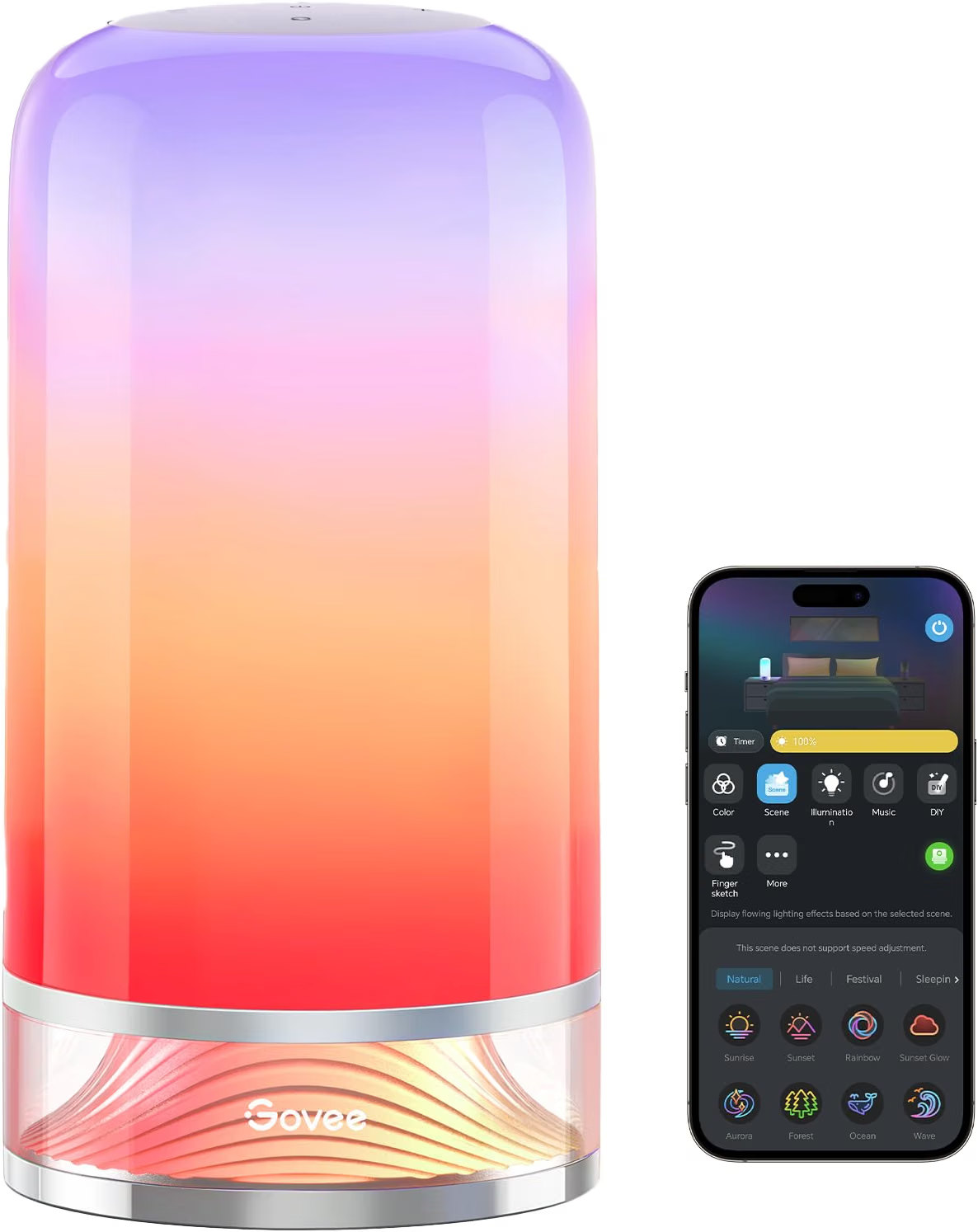
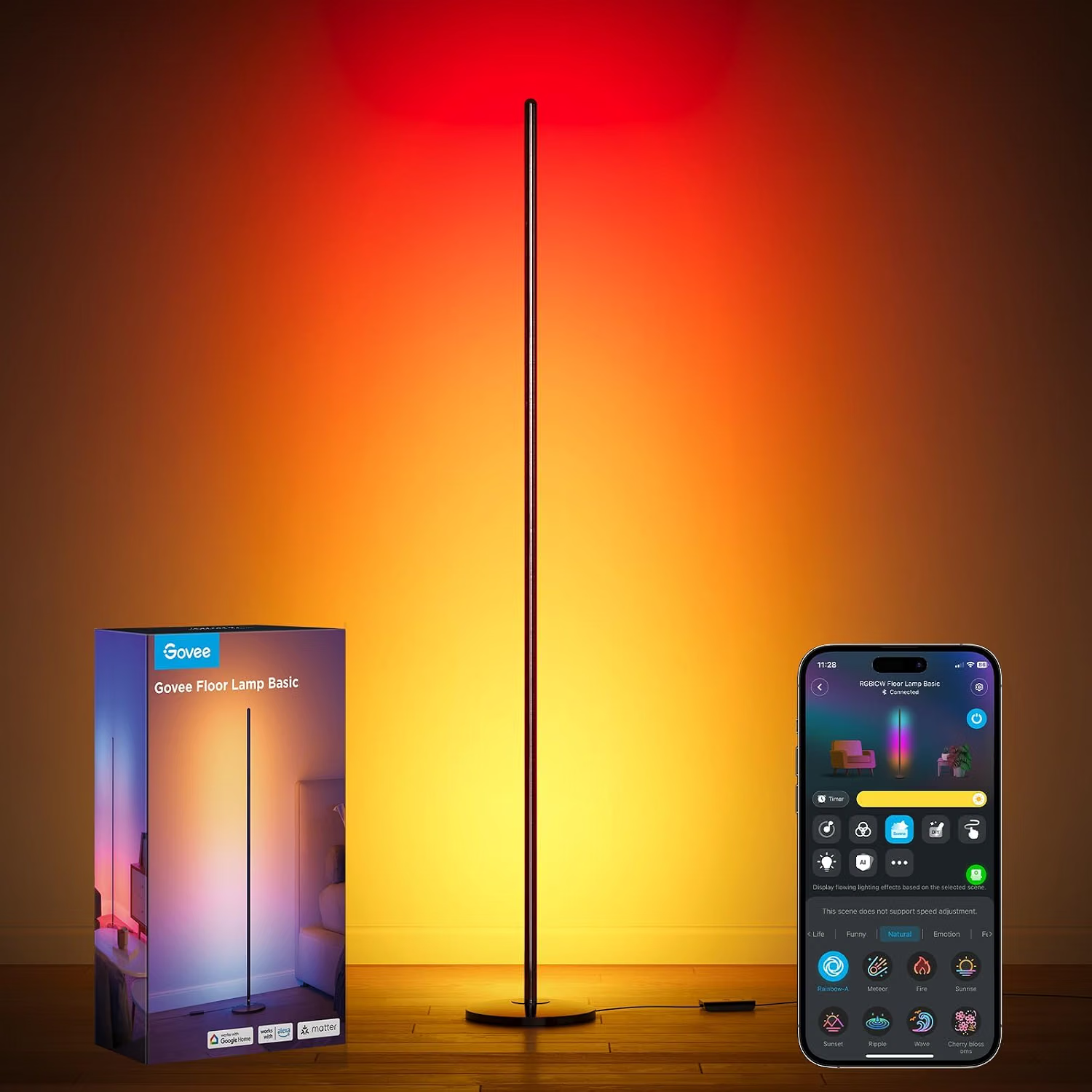
    The Govee RGBIC Floor Lamp Basic is a black LED corner floor lamp designed to provide adjustable ambient lighting in spaces such as bedrooms, living rooms, gaming areas, offices, and entertainment spaces. With a stated brightness of up to 1000 lumens and RGBIC lighting technology, it combines functional illumination with customizable color effects.

    Unlike a conventional floor lamp that may rely on a replaceable bulb and a physical switch, a smart RGBIC floor lamp is designed around digital control and lighting customization. Users can select different colors, brightness levels, and lighting effects according to the activity or atmosphere they want to create.

    This can make one floor lamp useful in several different situations. A brighter setting may contribute additional illumination to a living room or workspace, while a lower, more colorful setting can function as accent lighting during a movie, game, or evening gathering.

    At the same time, RGBIC lighting should be understood primarily as a flexible form of ambient and accent lighting. It does not necessarily replace every other source of illumination in a room. Task lighting, general ceiling lights, reading lamps, and other fixtures each serve different purposes.

    The Govee RGBIC Floor Lamp Basic is therefore best considered as part of a broader lighting arrangement. Its vertical design can help fill an empty corner, while its color and brightness controls provide opportunities to adapt the room’s appearance throughout the day.

    This guide explains the main characteristics of the lamp, how RGBIC technology works in practical terms, possible applications, setup considerations, and how a smart corner floor lamp compares with other common lighting categories.

    What Is the Govee RGBIC Floor Lamp Basic?

    The Govee RGBIC Floor Lamp Basic is a vertical LED floor lamp designed to stand independently on the floor, typically near a wall or in a room corner.

    The term “corner lamp” describes its intended placement and lighting approach. Rather than illuminating a surface from a table or hanging from the ceiling, the lamp occupies vertical space and can direct or diffuse light into the surrounding room.

    Its black finish gives it a relatively neutral appearance that can work with many interior styles.

    The lamp’s RGBIC technology adds color customization beyond conventional white LED illumination.

    RGBIC is related to RGB lighting, but the “IC” component refers to integrated control circuitry that can allow different sections of an LED light source to display different colors as part of an effect.

    This makes it possible to create more dynamic lighting scenes rather than limiting the entire lamp to one color at a time.

    The stated 1000-lumen brightness is another important characteristic.

    Lumens describe the amount of visible light produced by a source. A higher lumen figure generally indicates more total light output, although perceived brightness also depends on how the light is distributed, the room’s size, wall colors, placement, and the user’s viewing position.

    Key Features

    Up to 1000 Lumens of LED Illumination

    The Govee RGBIC Floor Lamp Basic is specified with brightness of up to 1000 lumens.

    This provides enough output for the lamp to contribute meaningful illumination to a room rather than functioning exclusively as a tiny decorative accent.

    However, the usefulness of a particular brightness level depends on the environment.

    A 1000-lumen lamp positioned in a small room may contribute significantly to the overall lighting, while the same lamp used in a large living room may function primarily as supplemental illumination.

    The way a floor lamp is positioned also matters. Light directed toward a nearby wall can create a different visual effect from light distributed more directly into the room.

    RGBIC Lighting

    RGBIC is one of the defining features of the lamp.

    Traditional white LED lighting focuses on illumination, while RGB lighting introduces color selection.

    RGBIC can provide more complex multi-color effects because different sections of the lighting system can be controlled as part of a scene.

    This can be useful for decorative applications.

    A user might select a single warm color for a subtle evening atmosphere or use a multi-color effect when creating a more energetic environment for entertainment.

    The exact effects and available controls depend on the supported Govee software and current functionality.

    Corner-Friendly Vertical Design

    The vertical design makes use of floor-to-ceiling space that might otherwise remain unused.

    A corner can sometimes feel visually empty, particularly in minimalist rooms or spaces with limited furniture.

    Adding a floor lamp can fill that area while providing a practical lighting function.

    The vertical orientation can also help distribute light higher in the room than a small table lamp.

    This can create indirect illumination when the lamp is positioned close to a wall.

    Black Finish

    The black finish provides a simple visual appearance that can blend into many modern interiors.

    Because the lamp is tall, its appearance can be noticeable even when the light is switched off.

    For this reason, placement and design can matter almost as much as the lighting effect itself.

    A neutral finish can make it easier to incorporate the lamp into a bedroom, living room, office, or gaming space without requiring the rest of the décor to match a particular color.

    LED Lighting

    LED technology provides the underlying light source.

    LED lamps are commonly used in modern lighting because they can provide substantial illumination in relatively compact fixtures.

    They also support rapid changes in brightness and color when paired with suitable control electronics.

    For a smart floor lamp, LED technology is particularly useful because the same light source can be controlled digitally.

    Smart Lighting Control

    The Govee RGBIC Floor Lamp Basic is designed to provide more than simple on/off functionality.

    Smart lighting controls can allow users to adjust brightness, colors, and effects according to their preferences.

    Depending on the current software and supported ecosystem, controls may include app-based adjustments, scenes, and other smart-lighting features.

    Because connected products can receive software updates, available functions may change over time. Users should consult the manufacturer’s current documentation for the latest capabilities.

    How the Govee RGBIC Floor Lamp Basic Can Be Used

    Living Room Accent Lighting

    A floor lamp can be placed beside a sofa, entertainment center, bookshelf, or room corner to add a secondary light source.

    Rather than relying entirely on an overhead fixture, users can create multiple layers of illumination.

    For example, a ceiling light can provide general lighting while the corner lamp contributes softer or colored light.

    This layered approach can change the atmosphere of a room without requiring major changes to the furniture or electrical installation.

    Bedroom Lighting

    The bedroom is another natural application.

    A tall corner lamp can provide ambient lighting without occupying a bedside table.

    Users can select a lower brightness in the evening and choose colors that complement the room’s décor.

    Because RGB lighting can be visually stimulating, people who prefer a calmer bedroom environment may choose more subdued settings.

    The lamp’s role can also change throughout the day. It may provide brighter supplemental illumination during daytime activities and lower ambient lighting later.

    Gaming Room Lighting

    RGBIC floor lamps are often used as part of gaming-room setups.

    The vertical placement allows the lamp to add a large area of colored illumination without occupying the main desk surface.

    This can complement monitors, keyboards, desktop lighting, or other RGB accessories.

    Multi-color scenes can also contribute to the visual environment around a gaming station.

    The lamp does not have to match every other RGB device to be useful. A coordinated color palette can be enough to create a consistent appearance.

    Home Theater and Movie Nights

    A floor lamp can also function as ambient lighting during entertainment.

    Some people prefer not to watch a screen in complete darkness, while bright overhead lighting can create distracting reflections.

    A low-intensity corner lamp can provide background illumination without becoming the main visual focus.

    The ideal setting depends on the room, screen placement, and personal preference.

    Users should experiment with positioning to minimize reflections on televisions or monitors.

    Home Office

    A floor lamp can provide supplemental illumination in a home office.

    It may help brighten a darker corner of the room and reduce the contrast between a bright monitor and a dim surrounding environment.

    However, a corner floor lamp is not always a substitute for dedicated desk lighting.

    People working with printed documents or detailed materials may still benefit from a task lamp positioned closer to the work surface.

    The floor lamp can instead contribute to the overall room lighting.

    Reading Areas

    A floor lamp can be useful near a chair or reading area.

    If positioned appropriately, it can provide additional illumination around the seating area.

    The lighting requirements for reading are more specific than those for decorative illumination, so users should consider the lamp’s brightness, position, and potential shadows.

    A dedicated reading lamp may offer more directional control when detailed task lighting is the priority.

    Apartment and Small-Space Lighting

    Vertical lighting can be particularly useful in apartments or rooms where table surfaces are limited.

    Instead of placing another lamp on a desk or side table, a floor lamp uses the floor area and vertical space.

    This can leave other surfaces available for books, electronics, decorations, or everyday items.

    Decorative Lighting

    RGBIC technology gives the lamp a strong decorative role.

    Users can choose colors that complement furniture, wall décor, or other lighting.

    For events, a colorful scene can change the atmosphere of the room without requiring permanent decorative installations.

    The lamp can therefore serve as both a functional light and an interior-design element.

    Understanding Lumens and Brightness

    The 1000-lumen specification provides a useful reference point, but it should not be interpreted as a guarantee that every room will appear equally bright.

    Lumens measure light output, while perceived brightness depends on several factors.

    Room size is one.

    Wall color is another.

    Light-colored walls can reflect more light around a room, while darker surfaces absorb more.

    The lamp’s position also matters.

    A lamp directed toward a wall can create broad indirect illumination, while positioning it in an open area may distribute light differently.

    Brightness settings matter as well.

    If the lamp is capable of adjustable brightness, users can select an appropriate level rather than operating it at maximum output at all times.

    Understanding these factors helps explain why a lumen figure alone cannot determine how a lamp will look in a particular room.

    Understanding RGBIC Lighting

    RGBIC lighting is different from ordinary single-color lighting because it can create more complex visual effects.

    Imagine a vertical strip of LEDs.

    With basic single-color control, the entire strip might display one color.

    With more advanced RGBIC control, different sections can participate in a scene with multiple colors.

    This creates effects such as gradients, transitions, and other dynamic patterns.

    The result can be especially noticeable on a tall floor lamp because the vertical form gives multi-color scenes a larger visual presence.

    RGBIC lighting is therefore particularly relevant for ambient environments, gaming rooms, entertainment spaces, and decorative setups.

    For practical illumination, users may still prefer a simpler white or neutral setting.

    Creating Layers of Light

    Good room lighting often involves several layers.

    Ambient lighting provides general illumination.

    Task lighting supports specific activities such as reading or working.

    Accent lighting highlights architectural features, artwork, furniture, or decorative elements.

    A floor lamp can contribute to more than one of these categories depending on its brightness and placement.

    For example, it can provide ambient illumination when set to a bright neutral tone and act as accent lighting when switched to a lower colored setting.

    Using it alongside existing ceiling and task lights can create more flexibility than relying on one fixture for every purpose.

    Who May Find This Type of Floor Lamp Useful?

    People Updating a Room Without Major Renovation

    A floor lamp can change the appearance of a room without requiring new wiring or permanent installation.

    It can be moved when furniture arrangements change.

    This makes floor lighting a relatively flexible way to experiment with room illumination.

    RGB Lighting Enthusiasts

    People who enjoy customizable lighting can use RGBIC effects as part of a larger setup.

    The vertical format can add another dimension to an RGB environment that already includes desktop or wall lighting.

    Gamers

    A corner lamp can complement gaming equipment while leaving the desk itself relatively uncluttered.

    The vertical light source can also create a more immersive background environment.

    Remote Workers

    A home office may benefit from supplemental ambient illumination.

    A floor lamp can brighten a darker part of the room while keeping desk space available for work equipment.

    Interior-Design Enthusiasts

    People who use lighting as part of their décor may appreciate the ability to change colors and scenes according to the season, occasion, or room design.

    Small-Space Households

    People with limited table and desk space can use vertical lighting to reduce competition for horizontal surfaces.

    Important Things to Consider

    Floor Stability

    A tall floor lamp should be placed on a stable, level surface.

    Because the lamp has a vertical profile, its stability matters.

    Avoid placing it where people frequently walk, where pets may knock it over, or where furniture could accidentally contact it.

    Cable Placement

    The lamp is powered by an electrical cable, so cable management should be considered during installation.

    The cord should not cross a walking path where someone could trip over it.

    It should also not be pinched beneath heavy furniture or placed in a position where it can be pulled accidentally.

    Room Size

    The lamp’s 1000-lumen output can contribute significant illumination, but larger rooms may require additional lighting.

    A single floor lamp should not necessarily be expected to illuminate every area evenly.

    Think of it as one component of the room’s lighting system.

    Color vs. Function

    RGB colors are useful for atmosphere, but they may not always be appropriate for detailed tasks.

    If the goal is reading, writing, crafting, or working with small objects, users may prefer a suitable white-light setting or an additional task lamp.

    Screen Reflections

    When used near a television or computer monitor, lamp placement deserves attention.

    Bright light directed toward a screen can produce unwanted reflections.

    Placing the lamp behind or beside the viewing area may create a more comfortable result.

    App and Software Requirements

    Smart lighting often depends on companion software.

    Users should verify smartphone compatibility and the requirements of the current Govee application.

    Connected features can also depend on account configuration and network connectivity.

    Voice Assistant Compatibility

    If voice control is important, users should verify which voice assistants and specific functions are currently supported by the particular model.

    Compatibility can change as software platforms evolve.

    Privacy and Account Security

    Connected lighting is less privacy-sensitive than a camera-equipped device, but it is still part of a digital ecosystem.

    Users should protect associated accounts and use strong credentials.

    Keeping companion applications and supported firmware updated can also be part of normal device maintenance.

    Smart Floor Lamp vs. Traditional Floor Lamp

    A traditional floor lamp usually offers straightforward lighting through a switch, dimmer, or compatible bulb.

    Its main advantage is simplicity.

    A smart RGBIC floor lamp adds digital control, color customization, and potentially programmable lighting scenes.

    The additional functionality can be useful for people who want their lighting to change throughout the day.

    However, smart features also introduce additional setup and software dependencies.

    Someone who only needs a reliable light source may prefer a simpler fixture.

    Someone interested in customizable ambient lighting may appreciate the additional capabilities of a smart model.

    Smart Floor Lamp vs. Smart Bulb Floor Lamp

    Another approach to smart lighting is using a traditional floor lamp with a smart bulb.

    This allows the user to keep a conventional fixture while adding smart control through the bulb.

    A dedicated RGBIC floor lamp integrates the lighting system and fixture into one product.

    A smart-bulb setup may offer greater flexibility in choosing the physical lamp style, while an integrated floor lamp provides a purpose-built design.

    The better fit depends on whether the user prioritizes furniture aesthetics, bulb interchangeability, lighting effects, or simplicity.

    Floor Lamp vs. Table Lamp

    Table lamps occupy horizontal surfaces.

    Floor lamps use floor space and vertical height.

    This difference can be significant in small rooms.

    A desk or nightstand may already contain chargers, books, electronics, and other objects.

    Moving the light source to the floor can free that surface.

    Floor lamps can also provide a different distribution of light because their source is positioned higher.

    Table lamps remain useful when localized lighting is needed close to a particular surface.

    RGBIC Floor Lamp vs. Ambient LED Strip

    LED strips can be placed behind desks, televisions, shelves, beds, and other surfaces.

    They are often excellent for indirect accent lighting.

    A floor lamp offers a different form factor.

    It can stand independently and be repositioned without permanently attaching lighting to furniture or walls.

    An LED strip may therefore be better suited to concealed accent lighting, while a floor lamp can provide a more visible and movable lighting element.

    Setting Up the Govee RGBIC Floor Lamp Basic

    The exact assembly and setup procedure should follow the manufacturer’s current instructions.

    Generally, the process begins by assembling the floor lamp components and ensuring the base is securely connected.

    Position the lamp on a stable surface near an appropriate power outlet.

    After connecting the power supply, users can configure available controls according to the product documentation.

    If smart functionality is supported through a companion application, install the appropriate software on a compatible smartphone and follow the current pairing process.

    Once the lamp is connected, test basic controls before creating customized scenes.

    Starting with simple brightness and color adjustments makes it easier to understand how the lamp responds.

    After that, users can experiment with different scenes and schedules where supported.

    Choosing the Right Location

    Placement has a major impact on the lamp’s visual effect.

    A corner near a wall can allow light to reflect across a larger surface.

    Placing the lamp behind a sofa can create background illumination while keeping the fixture relatively unobtrusive.

    Near a television, the lamp can contribute ambient light, but it should be positioned carefully to avoid screen reflections.

    In a gaming room, placing the lamp behind or beside the desk can create a colorful background without competing directly with the monitor.

    In a bedroom, a corner position can keep the lamp away from the bedside area while still providing ambient illumination.

    There is no single ideal position for every room.

    The best placement depends on the room layout, furniture, wall surfaces, and desired lighting effect.

    Building Useful Lighting Scenes

    A smart RGBIC lamp can be used more effectively when scenes are tied to actual activities.

    A daytime scene might use brighter neutral illumination.

    An evening scene could reduce brightness and introduce a warmer color.

    A movie scene might use a low-intensity ambient color.

    A gaming scene could use a more dynamic RGBIC effect.

    A party or social scene might use brighter, more colorful transitions.

    The objective is not to create dozens of scenes simply because the software allows it.

    A few useful presets can be easier to manage and more likely to become part of everyday routines.

    Frequently Asked Questions

    What is the Govee RGBIC Floor Lamp Basic?

    It is a vertical LED floor lamp designed for ambient and decorative lighting, with RGBIC color capabilities and a stated maximum brightness of 1000 lumens.

    What does RGBIC mean?

    RGBIC refers to RGB lighting with integrated control circuitry that can independently control sections of the light source as part of certain multi-color effects.

    How bright is the lamp?

    The product is specified at up to 1000 lumens.

    Actual perceived brightness depends on the selected setting, room size, placement, wall surfaces, and other environmental factors.

    Can the lamp display multiple colors?

    RGBIC lighting is designed to support multi-color effects, allowing different sections of the light source to participate in certain scenes.

    Can it be used as a bedroom lamp?

    Yes. A floor lamp can provide ambient lighting in a bedroom, particularly when placed in a corner or beside furniture.

    Users can select brightness and colors according to their preferences.

    Can it be used in a gaming room?

    The RGBIC lighting design can be incorporated into gaming setups as ambient or decorative lighting.

    Its vertical form can also help illuminate a larger background area than a small desk light.

    Can it replace a ceiling light?

    Not necessarily.

    A floor lamp can provide supplemental or localized illumination, but room lighting requirements vary.

    Larger spaces may need multiple light sources for even illumination.

    Is 1000 lumens enough for a room?

    It depends on the room.

    Room size, ceiling height, wall color, lamp placement, and other lighting sources all affect how bright 1000 lumens will appear.

    Does a floor lamp need to be placed in a corner?

    It does not necessarily have to be in a corner.

    The product’s vertical design makes corner placement practical, but it can also be positioned beside furniture or in another suitable location where stability and cable access are maintained.

    Can it be used for reading?

    It can contribute illumination to a reading area, but the exact suitability depends on positioning and brightness.

    For detailed reading, users may still prefer dedicated task lighting positioned closer to the reading material.

    Can RGBIC lighting be used for normal illumination?

    Yes, depending on the selected lighting mode.

    However, neutral or white illumination may be more appropriate for tasks requiring clear visibility than saturated colors.

    Does the lamp use LED technology?

    Yes. The lamp is designed around an LED lighting system.

    Does it require a power outlet?

    The product is a corded floor lamp, so it requires access to a suitable electrical power source.

    Can I move the lamp to another room?

    A floor lamp can generally be repositioned when needed, provided it is safely assembled and placed near a suitable outlet.

    Users should disconnect power before moving electrical equipment when appropriate.

    Can it be used near a TV?

    It can be used near a television, but placement matters.

    The lamp should be positioned to reduce reflections and avoid creating distracting bright spots on the screen.

    Can I use it in a home office?

    Yes. It can provide supplemental ambient lighting and help brighten darker areas around a workspace.

    A dedicated desk lamp may still be useful for close-up work.

    Does smart lighting require a smartphone?

    Connected features commonly use companion applications, although the exact requirements depend on the product’s supported control methods.

    Users should check the current manufacturer’s instructions.

    Can smart lighting work without an internet connection?

    Some functions may work through local controls or direct connections, while certain connected features can depend on internet or cloud services.

    The exact behavior should be verified in the current product documentation.

    Does RGBIC lighting consume more power than ordinary lighting?

    Power consumption depends on brightness, color mode, lighting effects, and other operating conditions.

    Using the lamp at lower brightness generally changes its energy use compared with operating it continuously at maximum output.

    How should I position the lamp?

    A stable location near a wall or corner can help create indirect illumination.

    However, the ideal position depends on the room layout and intended use.

    Practical Tips for Everyday Use

    A smart floor lamp can be more useful when it is treated as part of the room’s overall lighting strategy.

    Start by identifying what the room needs.

    If the space feels dark in one corner, use the lamp to fill that area.

    If the goal is entertainment lighting, experiment with lower brightness and color effects.

    If the lamp is being used around a television or monitor, position it to minimize reflections.

    For a home office, use it as supplemental room illumination rather than assuming that colored light alone is sufficient for detailed work.

    For a bedroom, consider lower-intensity settings during the evening.

    It is also worth experimenting with indirect lighting.

    Positioning the lamp near a wall can allow light to reflect and spread across a larger surface, potentially creating a softer visual effect than placing it in the middle of an open area.

    Keeping Smart Lighting Simple

    The number of possible lighting colors and effects can make experimentation enjoyable, but too many settings can make a smart lighting system unnecessarily complicated.

    A small selection of useful scenes is often enough.

    For example:

    • Daytime lighting for general activity
    • Work lighting for a home office
    • Evening lighting for relaxation
    • Movie lighting for entertainment
    • Colorful lighting for gaming or social occasions

    These settings can cover many everyday situations without requiring constant manual adjustment.

    The lamp can then remain a practical fixture even when its smart features are not being actively used.

    Final Thoughts

    The Govee RGBIC Floor Lamp Basic combines the familiar functionality of a vertical floor lamp with customizable LED lighting and RGBIC effects.

    Its stated 1000-lumen output allows it to contribute meaningful illumination, while the RGBIC system provides a broader range of decorative possibilities than a conventional single-color lamp.

    The vertical form can be especially useful in corners, beside furniture, or in spaces where desk and table surfaces are already occupied.

    It can serve different purposes depending on the setting. In a living room, it can contribute ambient lighting. In a bedroom, it can provide a softer secondary light source. In a gaming space, RGBIC effects can become part of the visual environment. In a home office, it can help illuminate the surrounding room while leaving the desk available for work equipment.

    The lamp should still be considered one component of a complete lighting arrangement. A floor lamp may not replace dedicated task lighting or a room’s primary light source, particularly when detailed work or broad illumination is required.

    Users should also consider floor stability, cable placement, room size, screen reflections, smartphone and software requirements, and the differences between ambient color lighting and functional task illumination.

    RGBIC technology is particularly valuable for people who want their lighting to change with the activity. The same fixture can move from practical illumination to decorative color effects without requiring a different lamp.

    When used thoughtfully, a smart corner floor lamp can provide both functional and visual flexibility while making use of floor and vertical space that might otherwise remain unused.

    You can check more details on Amazon here.

  • Meta Ray-Ban Wayfarer Smart AI Glasses (Gen 2): A Practical Guide to AI-Enabled Eyewear

    Meta Ray-Ban Wayfarer Smart AI Glasses (Gen 2): A Practical Guide to AI-Enabled Eyewear

    Smart glasses have moved beyond the idea of simply placing a small display in front of the eyes. A newer category of connected eyewear combines familiar glasses designs with microphones, speakers, cameras, wireless connectivity, and artificial intelligence. Instead of replacing a smartphone or projecting information directly onto a user’s vision, these devices can provide hands-free access to selected digital functions while maintaining the appearance of conventional eyewear.

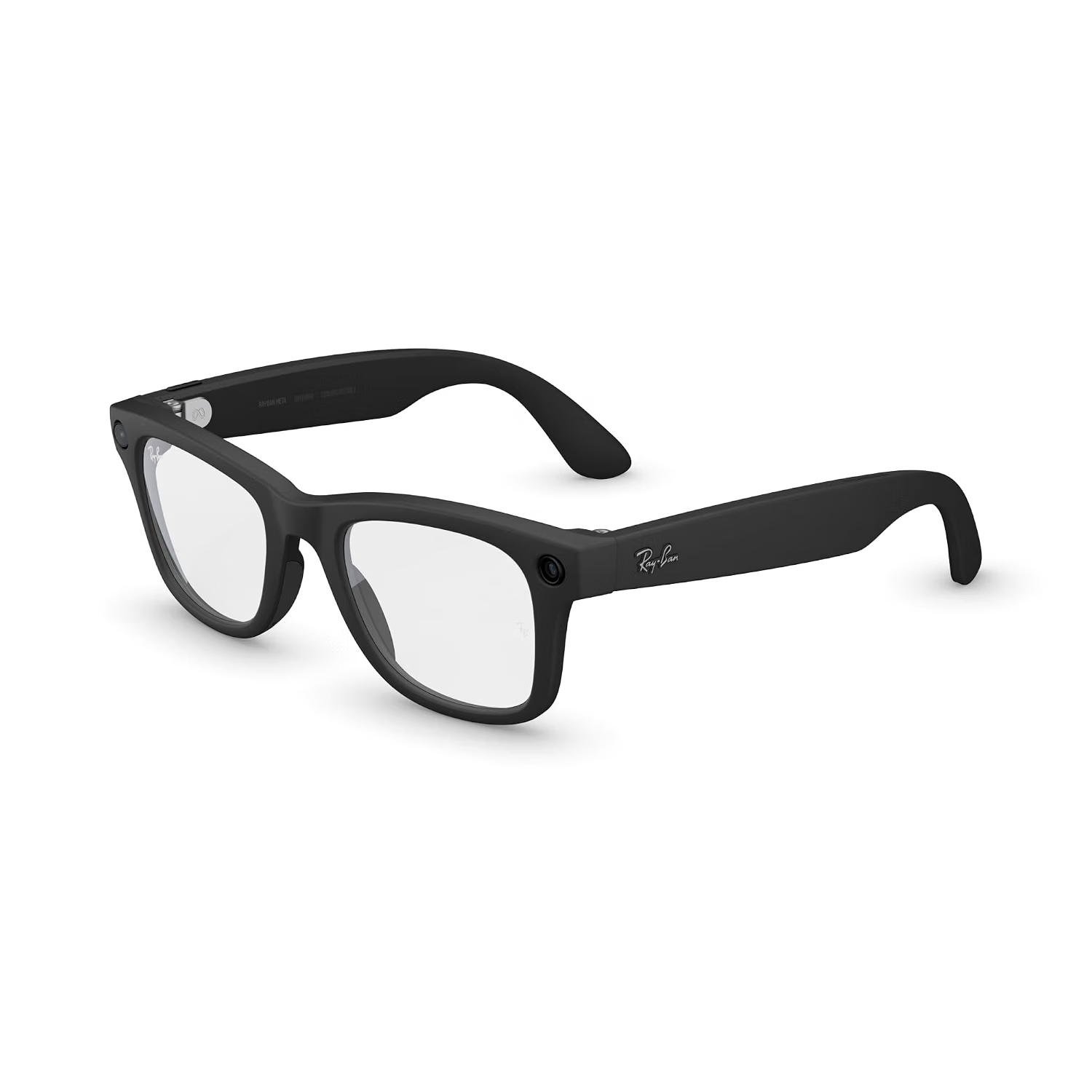
    The Meta Ray-Ban Wayfarer Smart AI Glasses (Gen 2) in Matte Black with Clear Lenses are part of this emerging category. The Wayfarer shape is based on a familiar eyewear design, while the smart features add capabilities such as cameras, open-ear audio, voice interaction, and AI-assisted functions.

    This combination creates a different way of interacting with technology. Rather than taking a phone out of a pocket, a user can potentially use voice commands, capture an image from their point of view, listen to audio, or interact with supported AI features through the glasses.

    At the same time, smart glasses introduce considerations that do not apply to ordinary eyewear. Battery life, smartphone compatibility, connectivity, camera privacy, charging, fit, and the availability of specific features all matter. AI functions can also depend on software, internet access, account settings, and regional availability.

    Understanding the product as a connected wearable rather than simply a pair of glasses makes it easier to evaluate where it can fit into everyday life.

    This guide explores the major features of the Meta Ray-Ban Wayfarer Smart AI Glasses (Gen 2), practical applications, setup considerations, privacy issues, and the differences between smart glasses and other wearable technology.

    What Are Meta Ray-Ban Smart AI Glasses?

    The Meta Ray-Ban smart glasses combine the physical form of Ray-Ban eyewear with electronic components developed for connected and AI-assisted functions.

    The glasses are designed to look and function as eyewear while also providing technology for capturing media, communicating, listening to audio, and interacting with digital assistants.

    Unlike augmented-reality glasses that place graphics or virtual objects directly into the user’s field of vision, this category of smart glasses generally focuses on audio, cameras, microphones, and voice interaction.

    That distinction is important.

    A user does not necessarily look at a screen inside the glasses to receive information. Instead, supported features can communicate through audio or be accessed through voice.

    The result is a more subtle approach to wearable technology.

    For some activities, this can be useful because the user can keep their hands free and remain focused on their surroundings.

    Key Features

    Wayfarer-Inspired Design

    The Wayfarer shape is one of the most recognizable elements of the product.

    The smart components are incorporated into an established eyewear style rather than being presented as a visibly futuristic headset.

    This can make the glasses suitable for everyday wear in situations where users would normally wear sunglasses or prescription-style eyewear, depending on the lens configuration and individual needs.

    The Matte Black finish provides a relatively neutral appearance that can work with a wide range of clothing and personal styles.

    As with any glasses, however, appearance is only one consideration. Fit, weight distribution, bridge comfort, frame dimensions, and compatibility with a user’s face shape can influence how comfortable the glasses are for extended periods.

    Clear Lenses

    The Amazon listing identifies this configuration as having clear lenses.

    Clear lenses are different from tinted sunglasses and are generally intended for ordinary indoor or low-light use rather than direct sunlight protection.

    This distinction matters when considering how the glasses will be used.

    Someone who spends much of the day indoors may prefer a clear-lens configuration, while someone primarily looking for outdoor eyewear may have different lens requirements.

    Users should also distinguish between lens appearance and lens protection. Specific optical properties should be verified from the current product documentation rather than assumed from the frame design.

    Integrated Camera

    One of the defining characteristics of Meta’s smart glasses is the integrated camera system.

    A camera mounted within the glasses allows users to capture photographs and video from a first-person perspective.

    This can provide a different perspective from conventional smartphone photography.

    Instead of holding a phone at arm’s length, the wearer can potentially capture moments while keeping their hands available for other tasks.

    This can be useful when documenting travel, outdoor activities, demonstrations, or everyday moments.

    However, the camera also introduces significant privacy responsibilities.

    People nearby may not always realize that a camera is active, so users should pay attention to local laws, venue policies, and social expectations before recording.

    Open-Ear Audio

    The glasses incorporate built-in speakers that allow audio to be heard without traditional in-ear earbuds.

    This approach can be useful for listening to music, podcasts, navigation instructions, calls, or other supported audio content while maintaining awareness of surrounding sounds.

    Open-ear audio does not mean complete isolation from the environment.

    However, users should still keep volume at a level that allows them to remain appropriately aware of traffic, people, alarms, and other environmental sounds.

    Microphones

    Integrated microphones enable hands-free interaction.

    Voice commands can be used to initiate supported functions without physically operating a smartphone.

    Microphones can also support phone calls and other communication features.

    Because the glasses are wearable throughout everyday environments, microphone privacy is worth considering alongside camera privacy.

    AI-Assisted Features

    The inclusion of AI is an important part of the product category.

    AI-enabled smart glasses can potentially respond to questions, provide information, interpret visual content, assist with certain tasks, and interact through natural voice commands.

    The exact AI capabilities available to a particular device can depend on Meta’s current software, account requirements, internet connectivity, location, language support, and feature rollout.

    AI responses should also be treated as generated assistance rather than infallible sources of information.

    For important decisions, users should independently verify relevant information.

    Hands-Free Interaction

    Hands-free control is one of the main ideas behind smart glasses.

    A smartphone requires a user to look down, hold the device, and interact with a screen.

    Smart glasses can move some interactions into the user’s immediate environment.

    A user might ask a voice question, capture a photo, start an audio experience, or interact with a supported assistant without removing a phone from a pocket.

    This can be especially convenient during activities where using a smartphone is inconvenient.

    How the Smart Glasses Can Be Used

    Capturing First-Person Photos

    One of the most natural applications is photography.

    Because the camera is positioned on the glasses, it captures approximately what the wearer is looking toward.

    This can produce a perspective that is difficult to reproduce with a conventional smartphone.

    Travelers can use this approach when walking through a city, exploring a museum where photography is permitted, or documenting outdoor activities.

    The hands-free nature can also make it easier to capture spontaneous moments.

    However, users should always respect photography restrictions and other people’s privacy.

    Recording Video

    Hands-free video recording can be useful for documenting activities where holding a camera is inconvenient.

    For example, a person working on a hobby project might want to record a process while keeping both hands available.

    Similarly, travelers may find first-person video useful for documenting parts of a journey.

    The quality and practical recording duration depend on the device’s hardware, battery, storage, software, and environmental conditions.

    Long recording sessions can consume battery power more quickly than occasional short captures.

    Listening to Music

    The integrated speakers can provide a convenient way to listen to audio without putting earbuds into the ears.

    This can work well during everyday activities such as walking, working at a desk, or traveling.

    Audio preferences vary significantly, so users should adjust volume appropriately and remain aware of their surroundings.

    Smart glasses are also not necessarily a replacement for dedicated headphones in every situation.

    People seeking strong noise isolation or high-fidelity listening may prefer conventional audio equipment designed specifically for those purposes.

    Making Phone Calls

    Integrated microphones and speakers can turn the glasses into a hands-free communication device when connected to a compatible smartphone.

    This can be useful while walking, preparing food, organizing a workspace, or performing another activity where holding a phone is inconvenient.

    Call quality can depend on the surrounding environment, network connection, Bluetooth or other wireless connectivity, and microphone positioning.

    Voice-Based Questions

    AI-assisted voice interaction can provide another reason to use smart glasses.

    A wearer may ask a question without typing it into a smartphone.

    This can be useful when the user wants quick information while their hands are occupied.

    However, AI-generated answers can contain mistakes or misunderstandings.

    The glasses should therefore be viewed as a convenient interface to AI features rather than as an unquestionable authority.

    Asking About Visual Information

    One interesting application of camera-equipped AI glasses is visual assistance.

    Depending on the supported software, a user may be able to ask the system about something in front of the camera.

    Potential examples could include asking about an object, requesting information about visible content, or getting assistance understanding something encountered during everyday activities.

    The availability and accuracy of these functions can vary.

    Users should also remember that visual AI interpretation is not equivalent to professional identification, diagnosis, or expert analysis.

    Travel and Exploration

    Smart glasses can be useful during travel because they combine several functions into one wearable device.

    A traveler can potentially take photographs, record video, listen to audio, make calls, and interact with supported AI functions while keeping their hands free.

    This can reduce the number of times a phone needs to be taken out.

    At the same time, international travelers should consider network availability, roaming, battery charging, local privacy laws, and restrictions on recording in certain locations.

    Everyday Memory Capture

    Some people use smartphones to document everyday moments that they might otherwise forget.

    Smart glasses provide another way to capture those moments.

    Because the camera is integrated into eyewear, the device can potentially be ready when an interesting situation occurs.

    However, convenience should not override consent.

    Recording people in private or sensitive situations can create ethical and legal problems, even when a device technically allows recording.

    Who May Find Smart AI Glasses Useful?

    Technology Enthusiasts

    People interested in emerging wearable technology may appreciate the combination of conventional eyewear and connected computing.

    Smart glasses offer an alternative to interacting with technology exclusively through phones and computers.

    Frequent Travelers

    Travelers can benefit from hands-free photography, audio, communication, and selected AI functions.

    The glasses can be useful when navigating unfamiliar environments or documenting experiences.

    However, travelers should check local laws and venue rules concerning photography and recording.

    Content Creators

    The first-person camera perspective can be useful for creators who want to document activities from their own viewpoint.

    This can be particularly relevant for demonstrations, hobbies, travel content, and behind-the-scenes material.

    Creators should still consider consent, copyright, privacy, and platform requirements before recording or publishing material involving other people.

    People Who Prefer Hands-Free Interaction

    Users who frequently perform tasks with both hands occupied may appreciate voice-based control and integrated audio.

    The glasses can provide selected smartphone-like functions without requiring constant screen interaction.

    Users Interested in AI

    The glasses can also appeal to people who want to experiment with AI in a more natural, conversational format.

    Instead of typing a prompt, users can speak to a supported AI assistant and receive an audio response or interact with AI-related features.

    Important Things to Consider

    Battery Life

    Battery capacity is an important consideration for any camera-equipped wearable.

    Using the camera, wireless connectivity, audio, and AI functions can consume more power than simply wearing ordinary glasses.

    Battery performance can also vary depending on usage patterns, temperature, software, network conditions, and other factors.

    Users who plan long recording sessions or extensive daily use should consider how often the glasses will need to be recharged.

    Charging Case

    Smart glasses generally require a charging solution that differs from ordinary eyewear.

    The charging case can become an important part of the daily routine because it provides a convenient place to store and recharge the glasses.

    Users should keep the case charged and avoid treating it like a passive glasses case.

    When traveling, remember that both the glasses and charging equipment are part of the overall setup.

    Smartphone Dependence

    Smart glasses are not completely independent computing systems.

    Many features depend on a paired smartphone, companion application, wireless connection, Meta account, or internet access.

    Before purchasing, users should check current compatibility requirements for their phone and operating system.

    Software features can also change over time.

    AI Availability

    AI features are particularly dependent on software.

    A feature available in one country or account configuration may not necessarily be available in another.

    Language support and regional availability can also differ.

    Users should therefore avoid assuming that every AI capability demonstrated in promotional material will necessarily be available under every configuration.

    Camera Privacy

    Camera-equipped glasses require greater awareness than ordinary glasses.

    The wearer should know when recording is occurring and understand how the device communicates that state.

    When recording other people, consent and local laws should be respected.

    Certain locations, including workplaces, private properties, schools, medical environments, museums, or events, may have specific rules about photography and recording.

    Audio Privacy

    Open-ear speakers can be convenient, but they also mean that audio may be audible to people nearby depending on volume and surroundings.

    Users should consider the environment before playing private or sensitive information through the glasses.

    Internet Connectivity

    AI services and certain connected functions may require internet access.

    In areas with poor connectivity, some features may work differently or become temporarily unavailable.

    This is especially relevant during travel, outdoor activities, or locations where cellular service is unreliable.

    Frame Fit

    Smart glasses contain electronics that conventional glasses do not need.

    This can affect weight distribution and overall dimensions.

    A comfortable fit is important because smart glasses are designed to be worn rather than simply placed on a desk.

    Users should check frame dimensions and available fitting options carefully.

    Clear Lenses and Sunlight

    Clear lenses are appropriate for many indoor environments but should not automatically be treated as a substitute for sunglasses.

    People spending significant time outdoors should verify the optical protection provided by the specific lens configuration.

    Prescription Lens Compatibility

    Users who normally wear prescription glasses should check whether the particular frame and lens configuration supports prescription lens replacement or an approved optical solution.

    Compatibility can depend on the frame model, prescription requirements, and authorized optical providers.

    It is important not to assume that every prescription can be accommodated simply because the glasses resemble conventional eyewear.

    Smart Glasses vs. Smartphones

    Smart glasses and smartphones serve different roles.

    A smartphone remains a much more comprehensive computing platform.

    It offers a large display, keyboard, extensive application ecosystem, substantial processing capabilities, and numerous communication tools.

    Smart glasses focus on specific hands-free interactions.

    They can be useful when the phone is inconvenient to hold or when the user wants a first-person camera perspective.

    Rather than viewing smart glasses as a complete smartphone replacement, it is more accurate to think of them as a wearable extension of a connected device ecosystem.

    Smart Glasses vs. Wireless Earbuds

    Wireless earbuds primarily focus on audio and communication.

    Smart glasses add cameras, microphones, and a physical eyewear form.

    If the primary goal is listening to music or making calls, earbuds may provide a more specialized audio experience.

    Smart glasses become more relevant when hands-free photography, AI interaction, and wearable integration are also important.

    The choice depends on which functions matter most to the user.

    Smart Glasses vs. Smartwatches

    Smartwatches provide information through a wrist-mounted display and can support notifications, health-related tracking, apps, communication, and other features depending on the model.

    Smart glasses use audio, voice, and cameras to provide a different interaction model.

    A smartwatch is useful when visual information on the wrist is important.

    Smart glasses can be useful when the user wants to keep their hands free and avoid looking down at a screen.

    The two categories can also complement each other rather than compete directly.

    Smart Glasses vs. Augmented-Reality Glasses

    These terms are sometimes used interchangeably, but they describe different approaches.

    Smart AI glasses such as this type generally emphasize cameras, microphones, speakers, voice interaction, and connected services.

    Augmented-reality glasses typically focus on displaying digital information within or over the user’s field of view.

    The Meta Ray-Ban approach does not mean that the wearer is constantly looking at a transparent computer screen.

    Understanding this distinction prevents unrealistic expectations about what the glasses are designed to do.

    Getting Started With Smart Glasses

    Setting up connected eyewear usually involves several steps.

    Start by charging the glasses and their charging case according to the manufacturer’s instructions.

    Next, install the required companion application on a compatible smartphone.

    The application can guide the pairing process and account configuration.

    Once connected, users should explore the available controls and permissions.

    It is worth understanding which features require the smartphone, which rely on internet access, and which functions can be used directly through the glasses.

    The camera and microphone permissions should also be reviewed carefully.

    After basic setup, test the audio, voice controls, and camera in an appropriate environment.

    Taking time to learn the controls can make the glasses easier to use without repeatedly reaching for the phone.

    Privacy and Responsible Use

    Smart glasses make privacy especially important because the camera and microphones are attached to a device that can be worn almost anywhere.

    Responsible use starts with awareness.

    Before recording, consider whether the people around you would reasonably expect privacy.

    Follow applicable laws and venue policies.

    Avoid recording sensitive situations without appropriate permission.

    Be particularly careful in medical, educational, workplace, and private environments.

    It is also useful to review the companion application’s privacy settings and understand how captured media is transferred or stored.

    Technology can make recording easy, but ease of recording does not eliminate the responsibilities associated with it.

    Using AI Responsibly

    AI can make smart glasses more useful, but it also introduces another layer of uncertainty.

    AI systems can misunderstand speech, misinterpret images, or generate incorrect information.

    For casual questions, this may simply be an inconvenience.

    For high-stakes topics involving health, legal matters, finances, safety, or important decisions, AI-generated information should be independently verified using appropriate authoritative sources.

    The same principle applies to visual AI.

    If an AI system identifies an object, location, text, or other visual information, the result should not automatically be assumed to be correct.

    Smart glasses can make AI more accessible, but they do not eliminate the need for human judgment.

    Maintaining the Glasses

    Because the glasses combine conventional eyewear with electronic components, maintenance requires some care.

    Clean the lenses using methods appropriate for the specific lens material.

    Avoid exposing the electronic components to conditions outside the manufacturer’s recommendations.

    Store the glasses in their charging case when they are not being worn.

    Keep the charging contacts clean and ensure the case has sufficient power.

    Avoid leaving the glasses in extreme heat, especially inside a parked vehicle, unless the manufacturer specifically states that such conditions are acceptable.

    Good care can help preserve both the optical and electronic components.

    Frequently Asked Questions

    What are Meta Ray-Ban smart glasses?

    They are connected eyewear that combines a conventional glasses design with cameras, microphones, speakers, wireless connectivity, and supported smart or AI features.

    Do the glasses have a camera?

    Yes. The smart-glasses design includes an integrated camera intended for hands-free photography and video capture.

    Can the glasses record video?

    The integrated camera is designed to capture video as well as photographs, subject to the device’s supported recording capabilities, storage, battery, and software.

    Can the glasses play music?

    The integrated speakers are designed to provide audio playback without requiring conventional earbuds.

    Can I make phone calls with the glasses?

    Supported connected functionality can allow hands-free calling through the glasses when properly paired with a compatible smartphone and service.

    Do I need a smartphone?

    Many smart features rely on a compatible smartphone and companion software.

    Users should check the current compatibility requirements before setup.

    Do the glasses display information in front of my eyes?

    This category of Meta Ray-Ban smart glasses is not primarily an augmented-reality display system.

    Its interaction model focuses more on audio, voice, cameras, and connected services rather than projecting graphics into the user’s field of view.

    What does AI do on smart glasses?

    Supported AI functions can provide voice-based assistance and may be able to interpret certain visual or contextual information.

    Available features can depend on software, region, language, account configuration, and internet connectivity.

    Can AI identify objects?

    Depending on currently supported features, AI may be able to interpret certain objects or visual information captured by the camera.

    Results should be treated as AI-generated assistance rather than guaranteed identification.

    Are clear lenses suitable for outdoor use?

    Clear lenses are primarily associated with ordinary, non-tinted eyewear.

    Users should verify the specific optical protection and intended use of the particular lens configuration rather than assuming that clear lenses provide the same protection as sunglasses.

    Can prescription lenses be used?

    Prescription-lens compatibility depends on the particular frame, prescription, and approved lens options.

    Users who need prescription lenses should verify compatibility before purchasing or modifying the glasses.

    Are the glasses waterproof?

    Users should consult the manufacturer’s current specifications for water and environmental resistance.

    Electronic eyewear should not be exposed to water beyond its stated protection rating.

    How long does the battery last?

    Battery performance depends on usage, including camera recording, audio, calls, connectivity, and AI functions.

    Actual runtime can therefore vary from one user to another.

    For exact current battery specifications, consult the manufacturer’s documentation.

    Can I use the glasses without an internet connection?

    Some functions may continue to operate locally, while AI and other connected features can depend on internet access.

    The exact offline capabilities depend on the current software and configuration.

    Are smart glasses private?

    Privacy depends partly on how the device is used.

    Because the glasses contain cameras and microphones, users should be particularly careful about recording other people and should follow applicable laws and venue rules.

    Can smart glasses replace a smartphone?

    They are not designed to provide the full range of functions offered by a smartphone.

    Instead, they can provide selected hands-free capabilities that complement a smartphone.

    Are they suitable for travel?

    Smart glasses can be useful for travel because they combine photography, audio, communication, and selected AI functions in a wearable format.

    Travelers should consider battery charging, connectivity, local laws, and recording restrictions.

    Practical Ways to Incorporate Smart Glasses Into Everyday Life

    The most useful approach is to start with a few functions rather than trying to use every available feature simultaneously.

    For example, a user might initially use the glasses for hands-free calls and music.

    After becoming familiar with those controls, camera functions can be incorporated into travel or hobby activities.

    AI features can then be explored as an additional tool for voice-based questions or supported visual assistance.

    This gradual approach can make the technology feel more natural.

    It also helps users determine which functions genuinely fit their routines.

    For travelers, the glasses may become a convenient first-person camera and audio device.

    For content creators, the camera perspective may be useful for documenting specific activities.

    For everyday users, hands-free calling and audio may be more valuable than advanced AI functions.

    There is no requirement to use every feature simply because the device supports it.

    Final Thoughts

    The Meta Ray-Ban Wayfarer Smart AI Glasses (Gen 2) represent a distinctive approach to wearable technology by combining familiar eyewear with cameras, microphones, speakers, wireless connectivity, and AI-assisted functionality.

    The clear-lens configuration and Matte Black Wayfarer-style frame give the device the general appearance of conventional eyewear, while the integrated electronics introduce capabilities that extend well beyond ordinary glasses.

    Hands-free photography, video recording, audio playback, calls, voice interaction, and supported AI functions can all contribute to a more convenient way of interacting with technology in selected situations.

    At the same time, smart glasses are not a universal replacement for smartphones, earbuds, smartwatches, or augmented-reality headsets. Each category is designed around different forms of interaction.

    Potential users should also consider battery life, smartphone compatibility, software availability, internet requirements, frame fit, lens needs, and privacy.

    The camera and microphones are particularly important to think about because wearing a recording-capable device can affect the privacy expectations of people nearby. Responsible use means respecting consent, local laws, venue policies, and sensitive environments.

    AI features also benefit from a measured approach. They can make information and certain digital interactions more accessible, but generated responses and visual interpretations can contain errors and should not be treated as authoritative for high-stakes decisions.

    Ultimately, the appeal of smart AI glasses comes from reducing the distance between the wearer and selected digital functions. Instead of reaching for a phone every time, users can interact through voice, audio, and a camera integrated into something they are already wearing.

    For people interested in hands-free technology, connected eyewear, first-person media capture, and AI-assisted interaction, this type of device offers a different way to approach everyday computing.

    You can check more details on Amazon here.

  • Etekcity Smart Scale for Body Weight, Body Fat and BMI: A Practical Guide to Connected Body Measurements

    Etekcity Smart Scale for Body Weight, Body Fat and BMI: A Practical Guide to Connected Body Measurements

    A bathroom scale has traditionally had one simple job: display a person’s body weight. Digital technology has expanded that role considerably. Modern smart scales can connect to smartphones, record measurements over time, and provide additional body-composition estimates alongside a conventional weight reading.

    The Etekcity Smart Scale for Body Weight, Body Fat and BMI is designed around this connected approach to personal measurement. Rather than relying solely on the number displayed on the scale, users can use compatible digital features to organize measurements and observe changes over time. The product listing also identifies the scale as FSA eligible, although eligibility and reimbursement depend on the applicable FSA plan and current rules.

    For anyone considering a smart scale, understanding what these measurements actually mean is more important than simply seeing a long list of numbers. Body weight is relatively straightforward, but measurements such as body fat percentage and BMI have limitations and should be interpreted within their proper context.

    A smart scale can therefore be useful as a tracking tool, but it should not be treated as a medical diagnostic device unless the manufacturer specifically states otherwise and the relevant measurement has appropriate regulatory authorization.

    This guide explains how a connected body-weight scale works, what its different measurements can represent, how Bluetooth-based tracking can fit into a personal routine, and what users should consider when interpreting body-composition information.

    Understanding the Etekcity Smart Scale

    The Etekcity Smart Scale is a digital bathroom scale designed to measure body weight while providing additional body-composition information through its connected features.

    Its basic function is familiar. A person steps onto the scale, and the device measures body weight.

    The smart aspect comes from the additional digital functionality. Depending on the supported application and configuration, measurements can be transferred to a smartphone through Bluetooth, allowing users to maintain a history instead of relying on memory or manually recording every measurement.

    This can change the purpose of a scale.

    Instead of asking only, “What do I weigh today?” users can look at a series of measurements and ask, “How has this number changed over several weeks?”

    That longer-term perspective can be more informative than a single measurement because body weight naturally fluctuates from day to day.

    Factors such as hydration, food intake, exercise, sodium consumption, clothing, and the time of day can influence the number displayed.

    The same principle applies to body-composition estimates. A single reading should not automatically be interpreted as a definitive description of a person’s physical condition.

    Key Features

    Body Weight Measurement

    Body weight is the most familiar measurement provided by a bathroom scale.

    Tracking weight can be useful for people who want a simple record of changes over time. It can also be one component of a broader fitness or wellness routine.

    However, daily weight fluctuations are normal.

    For example, a person can see a different reading from one morning to another without experiencing a corresponding change in body tissue. Water balance alone can cause noticeable short-term changes.

    For this reason, comparing measurements under reasonably consistent conditions can make trends easier to understand.

    Some people choose to weigh themselves at approximately the same time of day, under similar circumstances, rather than comparing completely different situations.

    Body Fat Percentage Estimates

    One of the features that distinguishes a smart body-composition scale from a conventional bathroom scale is its ability to provide an estimated body-fat percentage.

    Smart scales commonly use bioelectrical impedance analysis, or BIA, to estimate body composition.

    BIA works by passing a very small electrical current through the body and measuring electrical impedance. The resulting data can then be combined with information such as body weight and user characteristics to generate an estimate.

    The word “estimate” is important.

    A home smart scale does not directly observe every gram of body fat. Its body-composition result is generated through an algorithm and can be influenced by factors such as hydration and measurement conditions.

    Consequently, body-fat readings are generally more useful for observing changes under consistent conditions than for treating a single number as an exact measurement.

    BMI Information

    BMI, or Body Mass Index, is another commonly provided measurement.

    It is calculated from weight relative to height and is often used as a population-level screening measure.

    BMI can be useful as a simple reference point, but it does not directly measure body fat.

    For example, people with significant amounts of muscle can have a relatively high BMI without having a high body-fat percentage.

    Likewise, BMI does not fully account for differences in body composition, age, sex, or individual health circumstances.

    A smart scale can therefore make BMI convenient to track, but users should interpret it within its limitations.

    Bluetooth Connectivity

    Bluetooth connectivity allows compatible measurements to be transferred to a smartphone.

    This can reduce the need to manually write down every measurement.

    Instead, users can use the supported application to organize their information and view previous readings.

    The benefit of digital tracking becomes more apparent over time. A record containing several weeks or months of measurements can make gradual changes easier to recognize than isolated readings.

    Bluetooth is also useful because it can connect the physical weighing process with a broader digital tracking routine.

    Digital Measurement History

    A measurement history can help users focus on trends rather than individual readings.

    For example, a person may notice that their weight has remained within a similar range over several weeks even though individual daily measurements move up and down.

    Another person may observe a gradual change after modifying their activity or eating habits.

    The historical record does not explain why a change occurred, but it provides data that can be considered alongside other information.

    Smartphone-Based Tracking

    Connected scales are often used together with a companion smartphone application.

    The application can provide a more convenient interface for reviewing measurements than the scale’s physical display alone.

    Depending on the supported software, users may be able to view historical measurements and additional body-composition information.

    Because software features can change with updates, users should refer to the current manufacturer’s documentation for the latest supported functionality.

    FSA Eligibility

    The product listing identifies this Etekcity smart scale as FSA eligible.

    FSA stands for Flexible Spending Account, a type of U.S. benefits account that can be used for certain qualified healthcare expenses.

    However, the phrase “FSA eligible” should not be interpreted as a universal guarantee that every purchaser can use FSA funds for the product.

    Eligibility, reimbursement procedures, documentation requirements, and qualifying expenses can depend on the specific FSA administrator and applicable rules.

    Anyone planning to use FSA funds should verify eligibility with their plan administrator before making the purchase.

    How the Scale Can Be Used

    Establishing a Weight-Tracking Routine

    A smart scale can provide a simple way to establish a regular measurement routine.

    Some people prefer to measure their weight every day, while others may choose several times per week or less frequently.

    There is no universal requirement for how often someone should use a household scale.

    The important consideration is consistency.

    If measurements are taken under very different circumstances, comparing them may become more difficult.

    For example, weighing after a large meal and comparing that number with an early-morning reading may create a misleading impression of change.

    Monitoring Long-Term Trends

    The historical tracking capability can be useful for looking beyond individual measurements.

    Suppose a person records their weight over several months. The resulting data may show a gradual trend that is difficult to see when looking at individual readings.

    This is particularly relevant because weight naturally fluctuates.

    A temporary increase does not necessarily mean that body-fat levels have increased, just as a temporary decrease does not necessarily represent a meaningful change in body composition.

    Long-term patterns generally provide more useful context than isolated measurements.

    Supporting a Fitness Routine

    People who exercise regularly may incorporate a smart scale into their broader fitness tracking system.

    Weight and body-composition estimates can be recorded alongside information such as workout frequency, activity levels, and other personal metrics.

    This creates a more complete record of a person’s routine.

    However, body weight should not be treated as the sole measure of fitness progress.

    Strength, endurance, mobility, performance, recovery, and other factors may be meaningful depending on the individual’s goals.

    Tracking Changes During Lifestyle Adjustments

    Someone changing their exercise or eating habits may use a smart scale to monitor trends.

    For example, a person might record measurements before and after establishing a consistent training schedule.

    The scale does not determine whether a particular lifestyle change is effective, but it can provide one source of quantitative information.

    Users should avoid interpreting short-term fluctuations as proof that a specific habit has or has not worked.

    Maintaining Personal Records

    Digital records can also make personal tracking easier.

    Instead of keeping handwritten notes, measurements can be stored electronically and reviewed when needed.

    This may be particularly useful for people who enjoy looking at historical data or maintaining structured wellness records.

    Understanding Body Composition Measurements

    Body composition is more complicated than body weight.

    Two people can have the same body weight while having different proportions of muscle, fat, water, bone, and other tissues.

    That is why smart scales often provide more than one measurement.

    However, additional numbers do not automatically mean additional precision.

    BIA-based measurements are influenced by the body’s electrical properties, which can change with hydration and other factors.

    For example, drinking fluids or exercising before a measurement may affect the result.

    This means users should be cautious about interpreting small day-to-day changes in estimated body-fat percentage.

    A better approach is to look for patterns collected under similar conditions.

    If the scale consistently reports a gradual change over time, that trend may be more useful than comparing two isolated readings.

    Even then, the result remains an estimate.

    People who need clinically accurate body-composition measurements should consult an appropriate healthcare professional or use validated assessment methods recommended for their circumstances.

    Who May Find a Smart Scale Useful?

    People Interested in Long-Term Tracking

    A connected scale can be useful for someone who wants a digital record of measurements rather than a single number on a bathroom display.

    Historical data can make it easier to identify patterns.

    Fitness-Oriented Users

    People who already track workouts, nutrition, or other wellness information may appreciate having weight and body-composition estimates in the same general tracking routine.

    The scale can complement other measurements rather than replacing them.

    Users Who Prefer Smartphone Tracking

    Anyone who prefers digital records may find Bluetooth connectivity convenient.

    Instead of manually recording each reading, compatible measurements can be transferred to a smartphone and organized through supported software.

    Households Interested in Connected Devices

    Smart scales can also fit into a broader connected-home or personal technology environment.

    Users who already rely on smartphone applications for fitness and wellness tracking may find a connected scale easier to incorporate into their existing routines than a traditional scale.

    Important Things to Consider

    Body Fat Is an Estimate

    This is perhaps the most important point when using a smart body-composition scale.

    The body-fat percentage displayed by a household BIA scale should generally be understood as an estimate rather than a laboratory measurement.

    Different measurement methods can produce different results.

    Even the same scale may provide different readings under different conditions.

    Therefore, users should avoid treating small changes as precise changes in body fat.

    Hydration Can Affect BIA Measurements

    Because BIA relies on electrical impedance, hydration can influence readings.

    This is one reason consistency matters.

    If someone measures themselves after exercising, after drinking a large amount of water, or under significantly different circumstances from previous measurements, the resulting body-composition estimate may not be directly comparable.

    BMI Has Limitations

    BMI is easy to calculate and widely used, but it is not a complete measure of health or body composition.

    It does not distinguish between muscle and fat.

    This limitation is particularly relevant for people with higher levels of muscular development.

    BMI should therefore be viewed as one general screening metric rather than a standalone assessment of an individual’s health.

    Placement on the Floor

    A bathroom scale should be placed on a suitable hard, level surface according to the manufacturer’s instructions.

    Soft or uneven flooring can affect how a scale sits and may influence measurements.

    Users should follow the product documentation regarding recommended surfaces and setup.

    Follow the Manufacturer’s Instructions

    Smart scales can have specific requirements for calibration, positioning, user profiles, Bluetooth pairing, and application setup.

    Following the manufacturer’s current instructions can reduce setup problems and improve consistency.

    Smartphone Compatibility

    Connected features depend on compatible software and hardware.

    Before relying on app-based functionality, users should check the current compatibility requirements for their smartphone and operating system.

    Application features may also change over time.

    Multiple Users

    Some smart scales support multiple household profiles or user recognition features, but the exact functionality should be verified for the particular model and current software.

    If several people use the same scale, accurate profile assignment becomes important because measurements can otherwise be associated with the wrong account.

    Data and Privacy

    A connected scale creates digital health and wellness information.

    Users should understand where measurements are stored, what accounts are connected, and which permissions are requested by the associated application.

    Using strong account credentials and keeping the app updated are sensible digital-security practices.

    Medical Considerations

    A household smart scale should not automatically be treated as a medical diagnostic instrument.

    If someone has a medical condition, is monitoring a medically significant change in weight, or has been instructed by a healthcare professional to follow a particular measurement protocol, the healthcare professional’s guidance should take priority.

    This is especially important when a small measurement difference could influence a medical decision.

    Smart Scale vs. Traditional Digital Scale

    A traditional digital bathroom scale generally focuses on weight.

    It can be simple to use and may be appropriate for people who only want to know their current body weight.

    A smart scale adds digital connectivity and additional measurements.

    The main difference is therefore not necessarily accuracy but functionality.

    Someone who only needs weight information may not need connected features.

    Someone who wants measurement history, smartphone tracking, and body-composition estimates may find the additional functionality useful.

    More features can also mean more setup, so users should consider whether they will actually use the connected capabilities.

    Smart Scale vs. Fitness Tracker

    A fitness tracker and smart scale measure different aspects of personal activity and wellness.

    A wearable device may focus on movement, exercise, heart-rate-related metrics, sleep-related information, or other supported measurements.

    A smart scale primarily provides body weight and, depending on the model, body-composition estimates.

    These devices can therefore complement each other.

    A user might track daily activity through a wearable and periodically record body measurements through a connected scale.

    Neither device should be assumed to provide a complete picture of overall health.

    Smart Scale vs. Professional Body-Composition Assessment

    Professional assessment methods can differ significantly from consumer BIA scales.

    Clinical and laboratory environments may use specialized equipment and controlled procedures.

    A household smart scale is designed for convenience and repeated everyday tracking.

    The two approaches therefore serve different purposes.

    A smart scale can be useful for monitoring general trends at home, while people requiring a more precise assessment may need an appropriate professional method.

    Building a Consistent Measurement Routine

    Consistency is one of the simplest ways to make home measurements more useful.

    Users can choose a regular time and similar circumstances for each measurement.

    For example, someone might choose to measure at approximately the same point in their morning routine.

    The goal is not to eliminate every natural variation. That would be unrealistic.

    Instead, the goal is to reduce unnecessary differences caused by measurement conditions.

    It can also be helpful to think in terms of trends.

    If today’s measurement differs slightly from yesterday’s, there may be little reason to draw a conclusion from that difference alone.

    A series of measurements provides more context.

    Making Sense of Changes Over Time

    Imagine a person sees their weight increase slightly after a weekend.

    That does not automatically mean that they gained the same amount of body fat.

    Changes in water retention, food volume, sodium intake, and other factors can affect scale readings.

    Likewise, a sudden decrease should not automatically be interpreted as a specific amount of fat loss.

    Smart-scale data becomes more meaningful when viewed as one part of a broader pattern.

    Users can consider measurements alongside activity, nutrition, training, sleep, and other relevant information.

    This approach helps prevent overreaction to individual readings.

    Using the Scale Responsibly

    A healthy relationship with measurement technology is important.

    Numbers can be useful, but they can also become unnecessarily stressful if every small fluctuation is treated as significant.

    For many people, the purpose of tracking is to understand longer-term patterns rather than pursue a particular number every day.

    Users should also recognize that body weight naturally varies.

    A smart scale can provide information, but it does not determine whether someone is healthy, fit, or successful.

    Those questions are much broader than a collection of numbers on a bathroom scale.

    Frequently Asked Questions

    What does the Etekcity Smart Scale measure?

    The product is designed to measure body weight and provide additional information such as body-fat percentage and BMI through its connected functionality.

    Additional measurements should be interpreted according to the manufacturer’s methodology and limitations.

    How does a smart scale estimate body fat?

    Smart scales commonly use bioelectrical impedance analysis, or BIA.

    The device measures electrical impedance and combines that information with other data to generate an estimated body-composition result.

    Is the body-fat percentage exact?

    No household BIA measurement should automatically be treated as an exact measurement of body fat.

    Hydration and other factors can affect the result.

    For this reason, trends under consistent conditions can be more useful than individual readings.

    What is BMI?

    BMI stands for Body Mass Index.

    It is calculated using body weight and height and is commonly used as a general screening measure.

    BMI does not directly measure body fat and does not distinguish muscle from fat.

    Does Bluetooth make the scale a smart scale?

    Bluetooth connectivity allows compatible measurements to communicate with a smartphone or supported application.

    The smart functionality comes from combining the scale’s measurements with digital tracking and related software features.

    Can I use the scale without a smartphone?

    The exact offline functionality depends on the particular product and its design.

    A smart scale can generally still function as a physical scale, but some connected features require the companion application or a compatible mobile device.

    Users should consult the current manufacturer’s instructions for specific offline capabilities.

    How often should I weigh myself?

    There is no single frequency that is appropriate for everyone.

    Some people weigh themselves frequently, while others prefer weekly or less frequent measurements.

    Consistency is generally more important than choosing a particular frequency, especially when the goal is to observe longer-term trends.

    Why does my weight change from day to day?

    Daily fluctuations can result from changes in hydration, food and fluid intake, exercise, sodium consumption, and other normal factors.

    A short-term change does not necessarily represent a corresponding change in body fat.

    Why does my body-fat percentage change even when my weight does not?

    BIA estimates can vary with hydration and measurement conditions.

    A change in the displayed percentage does not necessarily mean that your actual body-fat level changed by the same amount.

    Can athletes use smart scales?

    Athletes and physically active people can use smart scales for personal tracking, but BMI and consumer body-fat estimates have limitations.

    People with higher muscle mass should be especially cautious about interpreting BMI as a direct measure of body fat.

    Is the Etekcity scale FSA eligible?

    The product listing identifies the scale as FSA eligible.

    However, FSA reimbursement depends on the applicable plan and eligibility rules. Users should confirm the purchase qualifies with their FSA administrator before using FSA funds.

    Can multiple people use a smart scale?

    Some connected scales support multiple users, but the exact number of profiles and recognition capabilities can vary.

    Check the current product documentation before assuming a particular multi-user feature is available.

    Can the scale replace medical equipment?

    A consumer smart scale should not automatically be considered a replacement for professional medical equipment.

    If accurate clinical measurements are required, users should follow guidance from an appropriate healthcare professional.

    Does the scale need WiFi?

    The product uses Bluetooth connectivity for supported smartphone functions. WiFi requirements depend on the specific connected software ecosystem and should be checked in the current setup documentation.

    What should I do if measurements seem inconsistent?

    First, check the scale’s placement and make sure it is being used under similar conditions each time.

    Review the manufacturer’s instructions for setup and measurement procedures.

    If unusual readings continue, consult the product’s troubleshooting guidance.

    Practical Tips for Better Tracking

    A smart scale is most useful when the information it produces is interpreted consistently.

    Place it in an appropriate location where it can remain stable.

    Use similar measurement conditions when possible.

    Record measurements regularly according to a routine that is comfortable and sustainable.

    Look at trends instead of reacting to every individual number.

    Remember that body-fat readings are estimates rather than direct measurements.

    Treat BMI as a general screening metric rather than a complete description of body composition.

    Keep the associated smartphone application updated and review its permissions and account settings.

    If the measurements are being used as part of a medically supervised program, follow the healthcare professional’s instructions rather than creating an independent interpretation of the data.

    Final Thoughts

    The Etekcity Smart Scale for Body Weight, Body Fat and BMI represents the broader shift from simple household scales toward connected personal measurement devices.

    Its primary purpose remains familiar: measuring body weight. Bluetooth connectivity and additional body-composition information expand that basic function by allowing users to maintain digital records and observe measurements over time.

    Body-fat percentage estimates and BMI can provide additional context, but they should be understood properly. A consumer smart scale does not turn these numbers into definitive medical measurements. BIA-based body-composition estimates can vary with hydration and other conditions, while BMI has well-known limitations as a measure of individual body composition.

    The greatest practical value of a connected scale is often the ability to establish a consistent record. Instead of focusing on one reading, users can examine patterns over weeks or months and consider those patterns alongside other aspects of their lifestyle.

    The scale may be suitable for people interested in personal tracking, fitness routines, digital wellness records, or connected measurement technology. At the same time, anyone using the device for medically significant monitoring should follow appropriate professional guidance.

    As with any personal measurement device, the numbers are most useful when they are placed in context. A smart scale can provide information, but understanding what that information means is just as important as collecting it.

    You can check more details on Amazon here.

  • Govee RGBIC Smart Table Lamp 2: A Practical Guide to Smart Bedside Lighting

    Govee RGBIC Smart Table Lamp 2: A Practical Guide to Smart Bedside Lighting

    Lighting can influence how a room feels, how easily different activities can be performed, and how a space transitions from daytime to evening. A traditional bedside lamp generally provides a simple source of illumination, but modern smart lighting can offer additional ways to adjust color, brightness, and atmosphere without relying solely on a physical switch.

    The Govee RGBIC Smart Table Lamp 2 is a compact, corded table lamp designed for bedside tables, desks, shelves, and other small spaces where decorative and functional lighting are useful. It combines touch-based controls with smart lighting capabilities, allowing users to adjust the lamp according to different situations.

    The concept behind a smart table lamp is straightforward. Instead of treating lighting as a fixed feature of a room, the lamp becomes something that can be adjusted throughout the day. A brighter setting can support reading or working, while softer illumination can create a calmer environment in the evening. Color lighting can also be used when the goal is decorative rather than task-oriented.

    One reason smart table lamps have become popular is their flexibility. A single lamp can serve several purposes without requiring different bulbs, shades, or fixtures. Depending on the available controls and software, users can change brightness, select colors, create lighting scenes, and incorporate the lamp into broader smart-home routines.

    The Govee RGBIC Smart Table Lamp 2 is therefore best understood as more than a conventional bedside light. It is a small connected lighting device designed to provide customizable illumination while occupying relatively little space.

    This guide explores its main features, possible uses, setup considerations, smart lighting concepts, and factors worth thinking about before adding a smart table lamp to a bedroom, office, living space, or other area of the home.

    Understanding the Govee RGBIC Smart Table Lamp 2

    The lamp is designed around the idea of combining everyday table lighting with programmable RGBIC illumination.

    RGBIC refers to a type of LED lighting technology that can support multiple lighting colors or segments within a lighting effect rather than treating the entire light source as one single color.

    That distinction can matter when creating decorative scenes. Instead of simply choosing between white, red, blue, or another single color, compatible RGBIC lighting can create more dynamic combinations and visual effects.

    For a bedside lamp, this provides two broad categories of use.

    The first is practical lighting. The lamp can provide illumination for activities such as reading, getting ready for bed, organizing a nightstand, or working at a desk.

    The second is ambient lighting. Different colors and scenes can change the visual character of the surrounding space without requiring additional decorative lights.

    Because the Govee RGBIC Smart Table Lamp 2 is corded, it is intended to operate from a connected power source rather than functioning as a battery-powered portable lamp. This can make it suitable for locations where the lamp will remain in one place.

    Key Features

    RGBIC Color Lighting

    One of the defining characteristics of this lamp is its RGBIC lighting capability.

    Traditional lamps usually focus on producing a particular white-light output. RGB lighting adds the ability to select colors, while RGBIC technology can support more complex multi-color effects.

    This can make the lamp useful for different moods and room styles.

    For example, warm-toned lighting may complement an evening environment, while colorful lighting can be used for entertainment, gaming, celebrations, or decorative purposes.

    The important point is that color lighting is not necessarily a replacement for task lighting. Different activities require different levels and qualities of illumination. Users may therefore want to choose practical settings for reading or working and reserve stronger colors or dynamic scenes for ambient use.

    Touch Control

    The Govee RGBIC Smart Table Lamp 2 incorporates touch-based interaction.

    Physical touch controls can be convenient when the lamp is being used as a traditional bedside light. A user does not necessarily need to reach for a smartphone every time they want to make a simple adjustment.

    This creates a useful distinction between local and smart control.

    Local controls are convenient for immediate adjustments, while connected controls can provide additional customization and automation options.

    For a bedside lamp, having a physical control method can be particularly practical because using a phone at night is not always desirable.

    Dimmable Lighting

    Adjustable brightness is another useful characteristic of a modern table lamp.

    A fixed brightness level may work well for one activity but feel excessive or insufficient in another situation.

    For example, a person reading at a desk may want more illumination than someone using the lamp as a subtle nighttime accent.

    Dimming allows the lamp to adapt to those changing circumstances.

    It can also help create a more comfortable transition between brighter daytime lighting and lower evening illumination.

    Brightness should still be selected according to the activity and the user’s visual needs. A very dim setting may be appropriate for ambience but not necessarily for reading small text.

    Compact Tabletop Design

    The lamp is designed for small surfaces.

    A compact footprint can be useful on a bedside table, office desk, bookshelf, dresser, or side table where available space is limited.

    Small lighting fixtures can be particularly helpful in modern workspaces because desks often have to accommodate monitors, keyboards, charging accessories, notebooks, and other equipment.

    The lamp can provide a dedicated lighting source without requiring a large floor fixture or wall installation.

    Corded Operation

    Unlike rechargeable portable lamps, a corded table lamp is designed to remain connected to a power source.

    This has both advantages and considerations.

    The main advantage is that users do not have to remember to recharge the lamp.

    For a bedside or desk lamp that remains in one location, continuous access to power can be convenient.

    The trade-off is that the lamp needs to be positioned close enough to a suitable outlet, and the power cable becomes part of the room’s cable-management considerations.

    Keeping the cord away from areas where it could be pulled, pinched, or become a tripping hazard is an important part of safe setup.

    Smart Lighting Controls

    Smart functionality expands the ways the lamp can be used.

    Depending on the supported Govee ecosystem and available functions, users may be able to configure lighting through a compatible application.

    Smart control can be useful when the goal is to adjust settings without physically reaching the lamp.

    It can also provide access to lighting scenes and other customization options that are difficult to reproduce with a basic table lamp.

    Software-based functionality can change over time, so users should check current product documentation and application support for the latest capabilities.

    How the Govee RGBIC Smart Table Lamp 2 Can Be Used

    Bedside Lighting

    A bedside table is one of the most natural locations for a compact smart lamp.

    The lamp can provide illumination for reading, preparing for sleep, checking a clock, organizing personal items, or simply creating a softer light source than a main ceiling fixture.

    The ability to adjust brightness can be particularly useful here.

    A brighter setting may be appropriate when reading, while a lower setting can provide enough illumination for moving around the room without creating the same level of brightness as a primary overhead light.

    Reading

    Table lamps are commonly used as reading lights, but the appropriate lighting level depends on the room, reading material, distance, and individual visual preferences.

    A dimmable smart lamp provides flexibility because the user can adjust the brightness rather than being restricted to one fixed output.

    When reading for extended periods, the lamp should be positioned to reduce glare and shadows on the page.

    The exact placement depends on whether the user is right- or left-handed and whether the reading material is physical or displayed on a screen.

    Bedroom Ambience

    Smart color lighting can serve a decorative role in a bedroom.

    Instead of relying exclusively on the room’s main light, users can create a secondary light source that contributes to the overall atmosphere.

    A subtle color can complement bedroom décor, while dynamic scenes can provide a more noticeable visual effect.

    Because the lamp is relatively compact, it can also fit into spaces where larger decorative lighting fixtures would be impractical.

    Children’s Rooms

    A small table lamp can also have practical uses in a child’s room, such as providing gentle evening illumination or serving as a decorative light.

    However, children’s rooms require additional attention to placement and electrical safety.

    The lamp and its cord should be positioned where young children cannot easily pull the device from a table or interfere with the power connection.

    Colorful lighting can also be entertaining, but it should not be assumed that every lighting effect is appropriate for every child or situation.

    Home Office

    A smart table lamp can complement a home-office lighting setup.

    During work, an appropriate neutral or white lighting setting may be useful for illuminating documents and the surrounding desk area.

    Outside work hours, the same lamp can switch to a lower brightness or decorative color setting.

    This makes the lamp adaptable without requiring separate lighting equipment for every purpose.

    A desk lamp should also be positioned carefully to minimize reflections on computer monitors.

    Gaming Spaces

    RGB lighting is commonly associated with gaming environments because color effects can contribute to the visual design of a room.

    The Govee RGBIC Smart Table Lamp 2 can potentially serve as an ambient accent next to a monitor, on a desk, or elsewhere in a gaming area.

    Color scenes can complement other lighting elements without necessarily requiring the entire room to be illuminated by RGB lighting.

    The lamp can therefore function as one element within a broader lighting arrangement.

    Entertainment Areas

    Smart color lighting can also be useful when watching movies, listening to music, or entertaining guests.

    A subtle ambient setting may complement the room without becoming the main source of illumination.

    For gatherings, colorful lighting can provide a decorative effect without requiring specialized event lighting.

    Because preferences vary, adjustable settings make it possible to change the atmosphere without physically replacing the lamp.

    Desk and Study Areas

    Students and remote workers often spend long periods at desks.

    A small lamp can provide additional localized lighting for notebooks, books, or other materials.

    The key is to balance brightness with the rest of the room’s lighting.

    A desk that is dramatically brighter than the surrounding room can create visual contrast that some users may find uncomfortable. A balanced lighting environment is generally easier to work with.

    Creating Different Lighting Environments

    One advantage of smart lighting is the ability to treat lighting as part of a routine.

    A lamp can have one setting for morning activities, another for work, and another for evening relaxation.

    For example, a simple routine might involve brighter practical lighting during the day and softer illumination later in the evening.

    Color scenes can be reserved for occasions when decorative lighting is desirable.

    The value of these settings is not necessarily the number of available colors. It is the ability to adapt the same physical lamp to different activities.

    This can make a small lamp more versatile than a traditional fixture with a single fixed operating mode.

    Who May Find This Type of Lamp Useful?

    Smart-Home Users

    People already using connected lighting products may appreciate adding another controllable light source to their environment.

    A smart lamp can become part of a broader approach to room lighting, particularly when users already rely on smartphone-based controls or other compatible smart-home features.

    People Who Want Flexible Bedroom Lighting

    A bedroom may require different lighting levels throughout the day.

    Bright light can be useful for practical tasks, while softer lighting may be preferred during relaxation.

    A dimmable lamp with color options provides several possibilities within one device.

    Remote Workers and Students

    People who spend significant time at a desk may benefit from having a dedicated light source that can adapt between work and leisure.

    The same lamp can support practical illumination during study or work and provide ambient lighting when the desk is being used for entertainment.

    Users Interested in Decorative Lighting

    RGBIC lighting can be appealing to people who want lighting to contribute to room design.

    Rather than treating a lamp as purely functional, users can incorporate it into the visual identity of a bedroom, office, gaming area, or living space.

    Important Things to Consider

    Check the Available Space

    Before placing a table lamp on a nightstand or desk, consider how much surface area is available.

    A lamp should not interfere with books, electronics, glasses, charging equipment, or other objects that need to remain accessible.

    Its position should also allow the light to illuminate the intended area without creating unnecessary glare.

    Think About Cable Management

    Because the lamp is corded, cable placement matters.

    The power cable should have a clear route to the outlet and should not be stretched tightly.

    Avoid placing cables where they can become trapped beneath furniture or create a trip hazard.

    A tidy cable arrangement can also make the lamp easier to reposition when necessary.

    Understand RGBIC vs. Traditional Lighting

    RGBIC lighting is designed primarily for color effects and ambient customization.

    It should not automatically be considered equivalent to a dedicated task-lighting fixture.

    If the lamp will primarily be used for reading or detailed work, users should consider whether its available white-light settings and brightness range are appropriate for those activities.

    Consider Smartphone and App Requirements

    Smart functionality may involve application setup and account configuration.

    Users should be comfortable with the software requirements associated with connected lighting.

    It is also worth checking whether the desired features require a particular mobile operating system, network configuration, or application version.

    Internet and Network Considerations

    Connected lighting can depend on network connectivity for certain functions.

    If the lamp is being integrated into a smart-home environment, reliable WiFi can improve the overall experience.

    Users should also understand what happens to local controls and existing settings if the network becomes temporarily unavailable.

    Consider Bedroom Placement

    A bedside lamp should be positioned securely.

    It should not be placed where bedding, curtains, or other materials can interfere with the lamp.

    The power cord should also be arranged so that it cannot easily be pulled from the table.

    These details may seem minor, but proper placement is an important part of using any corded electrical device safely.

    Smart Table Lamp vs. Traditional Table Lamp

    A traditional table lamp generally focuses on straightforward illumination.

    Its controls may consist of a switch, touch sensor, or dimmer, depending on the model.

    A smart table lamp adds connected functionality and more customization.

    The difference is not necessarily that one type is universally more useful. It depends on what the user wants from the lighting.

    Someone who simply needs a light source may not need smart features.

    Someone who wants adjustable colors, scenes, app-based control, and programmable lighting may appreciate the additional functionality of a smart model.

    Smart lighting can also introduce more setup than a conventional lamp.

    Smart Table Lamp vs. Smart Bulb

    A smart bulb is designed to make an existing compatible light fixture controllable.

    A smart table lamp integrates the lighting source and fixture into one device.

    A smart bulb can therefore provide flexibility if someone already owns a lamp they like.

    A smart table lamp can be more straightforward when the user wants a complete lighting fixture without selecting a separate bulb.

    The choice depends on the room, existing equipment, desired appearance, and level of customization.

    RGB Lighting vs. Standard White Lighting

    Standard white lighting is generally associated with everyday illumination.

    RGB or RGBIC lighting adds color options for decorative and atmospheric purposes.

    Neither category has to replace the other.

    A room can use practical white lighting for activities and colorful accent lighting for relaxation or entertainment.

    A lamp capable of switching between these different roles can be useful for people who want flexibility without installing several separate fixtures.

    How to Approach Smart Lamp Setup

    Setting up a smart table lamp generally involves two stages: physical installation and software configuration.

    Start by placing the lamp on a stable, appropriate surface.

    Connect the power cable according to the manufacturer’s instructions.

    After powering the lamp, follow the current Govee application instructions for connecting and configuring the device if smart control is desired.

    Once connected, give the lamp a simple name.

    A clear name makes it easier to identify the lamp later if multiple smart lights are present.

    After basic setup, test the physical touch controls and connected controls separately.

    Then experiment with brightness, colors, and scenes.

    It is generally easier to create useful routines after understanding the lamp’s basic functions.

    Making Smart Lighting Practical Rather Than Complicated

    Smart lighting can become unnecessarily complicated if every possible feature is used at once.

    A simpler approach is often more practical.

    Start with one or two lighting settings that match everyday needs.

    For example, users might create a comfortable evening setting and a brighter daytime setting.

    Once those are working reliably, additional scenes can be added for entertainment, gaming, seasonal decoration, or other occasions.

    The goal is to make lighting easier to manage rather than turning a simple bedside lamp into a complicated project.

    Frequently Asked Questions

    What is RGBIC lighting?

    RGBIC is a type of LED lighting technology that can support multiple colors or lighting segments within an effect.

    Compared with simple single-color lighting, it can create more dynamic and decorative visual scenes.

    Is the Govee RGBIC Smart Table Lamp 2 suitable for a bedside table?

    Its compact tabletop design makes it suitable for spaces such as bedside tables, desks, and other small surfaces, assuming the available space and power outlet are appropriate.

    Is the lamp rechargeable?

    The product is described as a corded table lamp, so it is designed to operate from a connected power source rather than being treated as a rechargeable portable lamp.

    Can the lamp be dimmed?

    The product is designed with adjustable lighting functionality, allowing users to adapt brightness for different situations.

    Exact controls and available ranges should be confirmed in the current product documentation.

    Can I use it for reading?

    A table lamp can provide useful reading illumination, but the appropriate brightness depends on the user’s environment and preferences.

    Users should position the lamp carefully to reduce shadows and glare.

    Can RGBIC lighting be used as the main room light?

    It can contribute to room illumination, but colorful ambient lighting is not necessarily a substitute for dedicated general or task lighting.

    For activities requiring clear visibility, an appropriate white-light source may be more suitable.

    Can the lamp be used in a home office?

    Yes, a compact smart table lamp can be useful in a home office for desk illumination and ambient lighting.

    Positioning is important to reduce reflections on monitors and shadows over work materials.

    Can it be used in a gaming setup?

    RGBIC lighting can be incorporated into gaming spaces as ambient or decorative lighting.

    The lamp can provide an additional lighting element without requiring an entire room to be equipped with RGB fixtures.

    Does smart functionality require an app?

    Smart lighting products commonly use a companion application for configuration and advanced controls.

    Users should follow the manufacturer’s current setup instructions to determine which functions are available through the application.

    Does the lamp need WiFi?

    Connected features may depend on network connectivity, depending on the specific function and ecosystem being used.

    The lamp’s basic physical controls may operate differently from cloud or app-dependent functions.

    Can I use different colors throughout the day?

    Color customization is one of the purposes of RGBIC lighting.

    Users can select different colors or scenes depending on their preferences and the activity taking place.

    Is a smart lamp better than a traditional lamp?

    The two types serve different needs.

    A traditional lamp emphasizes simple operation, while a smart lamp adds connectivity, customization, and automation possibilities.

    The more appropriate option depends on whether those additional features are useful in the user’s environment.

    Where can a smart table lamp be placed?

    Common locations include bedside tables, desks, shelves, dressers, side tables, and entertainment areas.

    The surface should be stable, and the lamp should be positioned safely near a suitable power source.

    Can the lamp replace a ceiling light?

    A small table lamp is generally intended as localized or ambient lighting rather than a universal replacement for a room’s primary lighting.

    Its effectiveness depends on the size of the room and the intended activity.

    Tips for Getting More From a Smart Table Lamp

    The easiest way to get value from a smart lamp is to think about the activities that happen around it.

    If it is primarily a bedside lamp, prioritize comfortable brightness and convenient nighttime control.

    If it is used at a desk, focus on practical illumination and minimizing reflections.

    If it is part of a gaming or entertainment area, color scenes may become more important.

    If it serves several purposes, creating a small number of distinct lighting presets can make switching between them easier.

    Another useful principle is to avoid excessive brightness when it is unnecessary. A lamp does not have to operate at maximum output simply because it can.

    Likewise, colorful lighting does not have to be intense to contribute to a room’s atmosphere. Subtle illumination can often work as an accent while allowing other room lighting to remain dominant.

    Final Thoughts

    The Govee RGBIC Smart Table Lamp 2 combines the familiar role of a compact tabletop light with the flexibility associated with modern smart lighting.

    Its RGBIC capabilities can provide colorful and dynamic lighting effects, while adjustable brightness makes the lamp adaptable to more practical situations. Touch controls provide a convenient local interaction method, and connected functionality can expand the ways the lamp is managed and customized.

    Its corded design makes it particularly appropriate for a permanent location such as a bedside table, desk, shelf, or side table. Users do not have to plan around battery charging, but they do need to consider outlet access and cable management.

    The most useful way to approach a smart table lamp is as a flexible lighting tool rather than simply a decorative gadget. It can provide practical illumination when needed and shift toward ambient lighting when the room’s purpose changes.

    Before setting one up, consider the available space, power connection, desired lighting style, software requirements, and the type of illumination needed for everyday activities. With those factors in mind, a smart table lamp can become a versatile part of a bedroom, home office, gaming space, or broader smart-home environment.

    You can check more details on Amazon here.

  • GHome Smart Plug: A Practical Guide to WiFi-Controlled Home Devices

    GHome Smart Plug: A Practical Guide to WiFi-Controlled Home Devices

    Smart home technology has made it easier to control everyday electrical devices without having to interact with them manually every time. From lamps and fans to seasonal decorations and small household appliances, a smart plug can add basic connected functionality to devices that were not originally designed as smart products.

    The GHome Smart Plug is a WiFi-enabled smart plug designed to provide remote and voice-based control for compatible household devices. It is intended to work with platforms such as Amazon Alexa and Google Home, allowing users to incorporate connected appliances into a broader smart home routine.

    Rather than replacing an appliance, a smart plug generally acts as an intermediary between the wall outlet and the appliance’s power connection. This makes the concept relatively simple: plug the smart device into the smart plug, connect the plug to a compatible WiFi network, configure it through the appropriate smart-home ecosystem, and then use an app or supported voice assistant to control the connected outlet.

    That simple concept can have practical applications throughout a home. A bedside lamp can potentially be switched off without getting out of bed. A living-room light can be controlled remotely. A regular fan can become part of a scheduled routine, provided the appliance resumes operation when power is supplied. Holiday lighting can be placed on a schedule instead of being switched manually every evening.

    At the same time, smart plugs have limitations. They do not automatically make every appliance “smart,” and compatibility depends on the appliance, network, smart-home platform, and electrical requirements. Understanding those details is important before incorporating a WiFi smart plug into a home.

    This guide explains the GHome Smart Plug concept, its main features, practical applications, compatibility considerations, and questions worth considering when setting up a connected outlet.

    What Is a WiFi Smart Plug?

    A WiFi smart plug is a small electrical accessory that sits between a wall outlet and another electrical device.

    The connected appliance still performs its normal function, while the smart plug controls whether electrical power is supplied through the outlet. Depending on the model and its software ecosystem, this control can be performed through a smartphone application, voice assistant, schedule, or automation.

    This distinction is important because a smart plug does not usually control the internal settings of an appliance.

    For example, consider a traditional table lamp with a physical switch. A smart plug can control the electrical supply to the lamp, but it does not necessarily change the lamp’s brightness or color. Similarly, a conventional fan may be switched on or off through the smart plug, but the smart plug does not inherently provide control over the fan’s speed.

    The most useful applications are therefore devices whose desired behavior can be achieved simply by turning their power supply on or off.

    The GHome Smart Plug follows this general approach while adding WiFi connectivity and compatibility with voice-control ecosystems such as Alexa and Google Home.

    Key Features of the GHome Smart Plug

    WiFi Connectivity

    One of the central features of the GHome Smart Plug is wireless network connectivity.

    Instead of requiring a dedicated wired connection, the smart plug communicates with a home WiFi network. This allows users to interact with the connected outlet through supported smart-home software.

    WiFi-based smart plugs can be particularly convenient because they can fit into an existing home network without requiring a separate hub for every individual outlet.

    However, the exact WiFi requirements should always be checked against the current product documentation and setup instructions. Some smart plugs are designed primarily around specific network configurations or WiFi bands, and compatibility can vary between products.

    Alexa Compatibility

    The GHome Smart Plug is designed to work with Amazon Alexa.

    This means users with a compatible Alexa setup may be able to control a connected device using voice commands after completing the necessary account linking and device configuration.

    For example, a lamp connected to the smart plug could potentially be assigned a recognizable name such as “bedside lamp.” Once properly configured, a user could use a voice command to switch that outlet on or off.

    Voice control can be useful in situations where reaching the physical outlet is inconvenient, such as when a device is positioned behind furniture or when someone wants to control several devices as part of a routine.

    The exact commands and available capabilities depend on the smart-home platform and the way the device is configured.

    Google Home Compatibility

    Google Home compatibility provides another route for voice and smart-home control.

    Users who already have a Google-based smart home can potentially integrate the smart plug into their existing environment rather than maintaining a completely separate control system.

    This can be useful for households that use Google Assistant-compatible devices throughout the home.

    As with Alexa integration, initial configuration is normally required. The smart plug must be connected to the appropriate application or service, and permissions or account linking may be necessary before voice control becomes available.

    Remote Control

    A WiFi smart plug can provide a way to control an outlet without physically touching the plug.

    Remote control can be useful for ordinary household situations. A user might want to switch a lamp on before entering a room, turn off a connected device after leaving home, or check whether an outlet-controlled appliance has been switched off.

    The practical usefulness of remote access depends on having a working network connection and properly configured software.

    Remote control should also not be confused with remote monitoring. Unless a smart plug specifically provides energy monitoring or another form of feedback, users should not assume that the app can determine whether an appliance is actually operating correctly.

    Scheduling and Automation

    Smart plugs can be particularly useful when their control capabilities are combined with schedules or routines.

    Instead of manually switching a connected device on and off every day, a user can potentially create an automated schedule through the compatible smart-home system.

    A simple example would be a decorative lamp that should turn on in the evening and switch off later at night.

    Another application could involve a small household device that should receive power during a particular period.

    Scheduling can reduce repetitive manual tasks, but users should consider the appliance itself before creating an automated routine. Not every device is designed to safely or predictably restart whenever power is restored.

    Compact Everyday Functionality

    A smart plug is designed around a straightforward purpose: adding connected on/off control to a conventional electrical device.

    This makes the concept suitable for incremental smart-home upgrades.

    Instead of replacing every appliance with a smart version, homeowners can potentially connect selected existing devices to smart plugs where appropriate.

    That approach can be useful when an appliance already performs the required function but lacks convenient remote or scheduled control.

    How the GHome Smart Plug Can Be Used

    Controlling Table Lamps

    Lighting is one of the most straightforward smart-plug applications.

    A conventional table lamp can be connected to the smart plug so that the outlet controls whether the lamp receives power.

    This can be useful for bedside lamps, desk lamps, floor lamps, or accent lighting.

    The main limitation is that the lamp itself must generally be compatible with simple power switching. If a lamp requires a separate electronic control system or has special operating behavior, the experience may differ.

    Creating Evening Lighting Schedules

    A smart plug can also be useful for scheduled lighting.

    For example, a household could create a routine that turns an entryway lamp on at a particular time and turns it off later.

    This can reduce the need to manually operate the light every evening.

    Schedules can also be adjusted when household routines change. Users should periodically review automated routines so that devices do not remain powered unnecessarily.

    Holiday and Decorative Lighting

    Seasonal lighting is another practical application.

    Christmas lights, decorative lamps, and other suitable plug-in decorations can potentially be controlled according to a schedule.

    Instead of manually switching decorative lighting on each evening, users can configure an automation around their preferred schedule.

    This can be particularly convenient when several decorative devices are used throughout the home.

    However, electrical load and the manufacturer’s specifications should be considered before connecting multiple devices through an outlet.

    Fans and Small Appliances

    A compatible fan or small appliance may also be controlled through a smart plug.

    The important consideration is how the appliance behaves when electricity is restored.

    Some devices return to their previous operating state after losing and regaining power. Others remain switched off until their physical button is pressed again.

    For smart-plug automation, the former behavior may be more useful because the smart plug can effectively control the appliance by controlling its power supply.

    Users should never assume that an appliance will automatically restart after power is restored. Checking the appliance’s instructions is a better approach.

    Bedroom Applications

    Smart plugs can be convenient around a bedroom.

    A bedside lamp is a common example, but other appropriate low-power devices may also benefit from scheduled or remote outlet control.

    A user could create a nighttime routine that switches a lamp off at a chosen time, reducing the need to reach across the room.

    Smart plugs can also be helpful for people who prefer controlling certain household devices through voice commands rather than physical switches.

    Home Office Applications

    A home office can contain several devices that are frequently switched on and off.

    A smart plug can potentially be used for suitable lamps, decorative lighting, or other compatible equipment.

    However, it is important to distinguish convenience from electrical management.

    A smart plug should not automatically be treated as a replacement for a properly designed power distribution system. Computers, monitors, printers, networking equipment, and other electronics may have specific electrical requirements and should be connected according to their manufacturers’ recommendations.

    Routines for Daily Activities

    The combination of scheduling and voice control can make a smart plug more useful than a simple remote-controlled outlet.

    For example, a morning routine could switch on a suitable lamp at a predetermined time. An evening routine could switch it off later.

    The goal is not necessarily to automate everything in the home. Instead, smart plugs can be used selectively for repetitive tasks where simple power control is sufficient.

    Who May Find a Smart Plug Useful?

    People Beginning a Smart Home Setup

    A WiFi smart plug can be an accessible introduction to smart-home technology.

    Users do not necessarily need to replace an existing appliance to experiment with remote control or automation. A compatible lamp or other suitable device can serve as a starting point.

    This incremental approach allows homeowners to determine which types of automation are genuinely useful in their daily routines.

    Users of Alexa or Google Home

    People who already use Amazon Alexa or Google Home may appreciate having another compatible device within their existing ecosystem.

    Instead of managing a completely separate control method, the smart plug can potentially become part of an established voice assistant setup.

    The actual experience will depend on the user’s existing devices, software versions, account configuration, and network.

    Busy Households

    Schedules can help reduce small repetitive tasks.

    A household that regularly switches the same lamps or decorative devices on and off at predictable times may find automation convenient.

    The benefit is less about adding complexity and more about removing unnecessary manual steps.

    Home Office Users

    People working from home may find scheduled lighting and voice-controlled devices useful during the workday.

    For example, a desk lamp or ambient light can be incorporated into a routine without requiring the user to reach for a physical switch.

    Again, the smart plug is most appropriate when the connected device works reliably with basic power switching.

    Important Things to Consider Before Setup

    Check the Electrical Specifications

    Electrical compatibility should always come first.

    Before connecting an appliance, check the smart plug’s rated electrical limits and compare them with the appliance’s requirements.

    High-power appliances can place substantial demands on an outlet. A smart plug designed for ordinary household electronics should not automatically be assumed suitable for every appliance in the home.

    When in doubt, consult the product documentation or a qualified electrician.

    Consider the Appliance’s Power-On Behavior

    This is one of the most overlooked aspects of smart-plug use.

    Suppose an appliance has a physical power button. If the button must be pressed manually every time the appliance receives electricity, a smart plug may only be able to control the electrical supply rather than the appliance’s actual operating state.

    For automation to work as expected, the appliance should have an appropriate power-on behavior.

    This is especially important for fans, coffee equipment, heaters, and other appliances that may have different operating characteristics.

    WiFi Coverage Matters

    Because the GHome Smart Plug uses WiFi connectivity, network coverage is an important part of the overall setup.

    An outlet located far from the router may experience weaker connectivity depending on the structure of the home and the location of networking equipment.

    Walls, floors, furniture, and other sources of interference can affect wireless performance.

    A smart plug should ideally be installed where the home network provides reliable coverage.

    Smart-Home Account Configuration

    Voice control generally requires more than simply plugging the device into a wall outlet.

    The user may need to install or configure the relevant application, connect the smart plug to WiFi, sign into the appropriate smart-home account, and enable the necessary integration.

    Naming devices clearly can also make voice commands easier.

    Instead of assigning several outlets confusing names, users might choose simple labels such as “Desk Lamp,” “Bedroom Lamp,” or “Living Room Light.”

    Security and Privacy

    Any connected home device should be treated as part of the household’s digital environment.

    Users should maintain strong account credentials, keep supported applications updated, and use a secure home WiFi network.

    It is also useful to understand what permissions an application requests and which smart-home accounts are linked to the device.

    Connected devices do not eliminate the need for ordinary cybersecurity practices.

    Power Interruptions

    A WiFi smart plug depends on electricity and network connectivity.

    If the household experiences a power outage or the WiFi network becomes unavailable, remote control may not function normally until the relevant systems are restored.

    Users should therefore avoid relying on a smart plug as the only control mechanism for anything that requires continuous operation or critical availability.

    Avoid Using Smart Plugs for Critical Equipment

    A smart plug is generally intended for convenience rather than life-critical or safety-critical control.

    It should not be treated as a substitute for dedicated electrical safety equipment or professional automation systems.

    Devices involved in heating, cooling, medical care, security, or other critical functions require particular caution. The appliance manufacturer’s instructions should take priority.

    Smart Plug vs. Smart Appliance

    A smart plug and a smart appliance solve related but different problems.

    A smart plug primarily controls electrical power.

    A smart appliance usually contains its own communication hardware and software, allowing more detailed control of its internal functions.

    For example, a smart plug might allow a traditional lamp to be switched on or off remotely. A smart bulb, by comparison, may allow brightness, color temperature, or color adjustments depending on its design.

    The choice depends on the level of control required.

    If the goal is simply to automate power to an existing appliance, a smart plug may be sufficient. If detailed control of the appliance itself is important, a dedicated smart device may be more appropriate.

    Smart Plug vs. Traditional Timer

    Traditional plug-in timers provide scheduled electrical control without requiring WiFi.

    They can be useful when a user only needs a predictable on/off schedule.

    A WiFi smart plug offers a different set of possibilities, including remote access and integration with compatible voice assistants and smart-home routines.

    The trade-off is additional setup and dependence on connected technology.

    Someone who wants a basic fixed schedule may prefer the simplicity of a conventional timer, while someone interested in app-based control or voice integration may prefer a connected smart plug.

    Smart Plug vs. Smart Power Strip

    A smart power strip can provide control over multiple outlets within one device.

    A smart plug generally focuses on one connected outlet or one electrical connection.

    A power strip may be useful when several devices need to be managed together, while individual smart plugs can provide more flexibility for separate appliances.

    The right approach depends on the physical layout of the workspace and how devices need to be controlled.

    Setting Up a Smart Plug: A Practical Approach

    Although exact instructions can vary, the general process for a WiFi smart plug typically involves several steps.

    First, inspect the product and confirm that the electrical environment is suitable.

    Next, install the manufacturer’s recommended application if required.

    The smart plug can then be connected to the household’s compatible WiFi network according to the setup instructions.

    Once the device appears in the application, it can usually be assigned a recognizable name.

    If Alexa or Google Home integration is desired, the appropriate smart-home account can then be connected according to the supported integration process.

    After setup, test the device manually before creating automation.

    This is an important step because it confirms that the basic connection works before adding schedules or voice commands.

    Once the smart plug responds reliably, users can create routines based on their actual needs.

    Starting with one simple automation is often easier than creating a complicated system immediately.

    Making Smart-Home Automations Easier to Manage

    Good naming is surprisingly important.

    If a home contains several smart plugs, unclear names can make voice control frustrating.

    Names should be short, descriptive, and associated with the physical location or connected device.

    Grouping compatible devices into rooms can also make routines easier to understand.

    Users should periodically review their automations. A schedule created months ago may no longer match the household’s current routine.

    For example, a lamp that once needed to switch on at a specific time may no longer need that schedule after a change in working hours or seasonal daylight.

    Smart-home automation works best when it reflects real habits rather than adding unnecessary complexity.

    Frequently Asked Questions

    Does the GHome Smart Plug work with Alexa?

    The product is designed to work with Amazon Alexa. Appropriate setup and account integration are required, and available functionality can depend on the compatible smart-home environment.

    Does it work with Google Home?

    The GHome Smart Plug is designed for compatibility with Google Home. Users should follow the current setup instructions to connect the device with their Google-based smart-home environment.

    Does a smart plug make any appliance smart?

    Not necessarily.

    A smart plug generally provides control over electrical power. It does not automatically add advanced functions to the appliance itself.

    A lamp, for example, may become remotely controllable, but the smart plug does not necessarily provide brightness control.

    Can a smart plug be controlled remotely?

    WiFi smart plugs can generally provide remote control through their supported application when the device and home network are properly connected.

    Network availability and account configuration can affect remote functionality.

    Can I use a smart plug with a lamp?

    Lamps are among the simplest applications for smart plugs because many conventional lamps can be controlled simply by switching their power supply.

    The lamp should still be operated within the electrical specifications of the smart plug.

    Can I use a smart plug with a fan?

    A compatible fan may be used with a smart plug, but users should first determine how the fan behaves when power is restored.

    If the fan requires a manual button press after losing power, remote power control may not produce the expected result.

    Can I schedule a device to turn on automatically?

    Scheduling is one of the common uses of connected smart plugs.

    The exact scheduling capabilities depend on the supported application and smart-home ecosystem.

    Does a smart plug require WiFi?

    A WiFi smart plug relies on a compatible wireless network for its connected features. Its remote and smart-home functionality may not work normally if the network connection is unavailable.

    Is a smart plug suitable for every appliance?

    No.

    Electrical ratings, appliance behavior, power requirements, and manufacturer instructions should all be considered.

    High-power or specialized appliances may require a different type of electrical control solution.

    Can I use several smart plugs in one home?

    A household can use multiple smart plugs, provided the network, electrical system, and supported smart-home ecosystem can accommodate them.

    Using clear names and room assignments can make multiple devices easier to manage.

    Does voice control work immediately after plugging it in?

    Usually, additional configuration is necessary.

    The smart plug must generally be connected to its supported application and, if desired, linked with a compatible voice assistant such as Alexa or Google Home.

    What happens if the WiFi goes down?

    Connected features such as remote app control or cloud-based voice commands may become unavailable while the network connection is interrupted.

    The exact behavior of the physical outlet after a network interruption depends on the device’s design.

    Can I use a smart plug for security purposes?

    A smart plug can potentially be used for lighting schedules that make a home appear occupied, but it should not be considered a complete security system.

    Security cameras, alarms, locks, and other dedicated security equipment serve different purposes.

    Is remote control the same as knowing whether an appliance is working?

    No.

    Controlling an outlet does not necessarily provide confirmation that the appliance itself is functioning correctly.

    Unless the smart plug specifically supports monitoring or feedback features, users should not assume that an “on” state means the appliance is operating normally.

    Practical Tips for Everyday Use

    A smart plug becomes more useful when it is assigned to a clear purpose.

    Start with a device that is simple to control, such as a lamp.

    Test manual app control before introducing voice commands.

    Once the basic connection is reliable, add a simple schedule.

    Use descriptive names that are easy to remember.

    Avoid unnecessary automations that make the smart home harder to manage.

    Most importantly, consider electrical safety before convenience. A connected outlet should always remain within the manufacturer’s specified operating limits.

    It is also worth remembering that automation is optional. A smart plug does not need to control everything in a home to provide value. Selective automation can often be easier to understand and maintain.

    Conclusion

    The GHome Smart Plug provides a way to introduce WiFi-based control to suitable conventional electrical devices. Its compatibility with Amazon Alexa and Google Home can make it useful for households that already use voice assistants or are beginning to build a connected home environment.

    Its practical applications include controlling lamps, scheduling decorative lighting, automating selected household devices, and reducing repetitive manual switching. Remote access and smart-home routines can add convenience without requiring every existing appliance to be replaced with a dedicated smart model.

    At the same time, a smart plug has a relatively specific role. It controls the electrical supply rather than automatically transforming an appliance into a fully connected device. Compatibility, electrical requirements, WiFi coverage, appliance power-on behavior, and smart-home account configuration should all be considered before installation.

    For simple devices that work well with on/off power control, a WiFi smart plug can be a practical component of a broader smart-home setup. The most effective use is generally one that solves a specific everyday problem while keeping the overall system simple and easy to manage.

    You can check more details on Amazon here.